Low Volume PCB Manufacturing
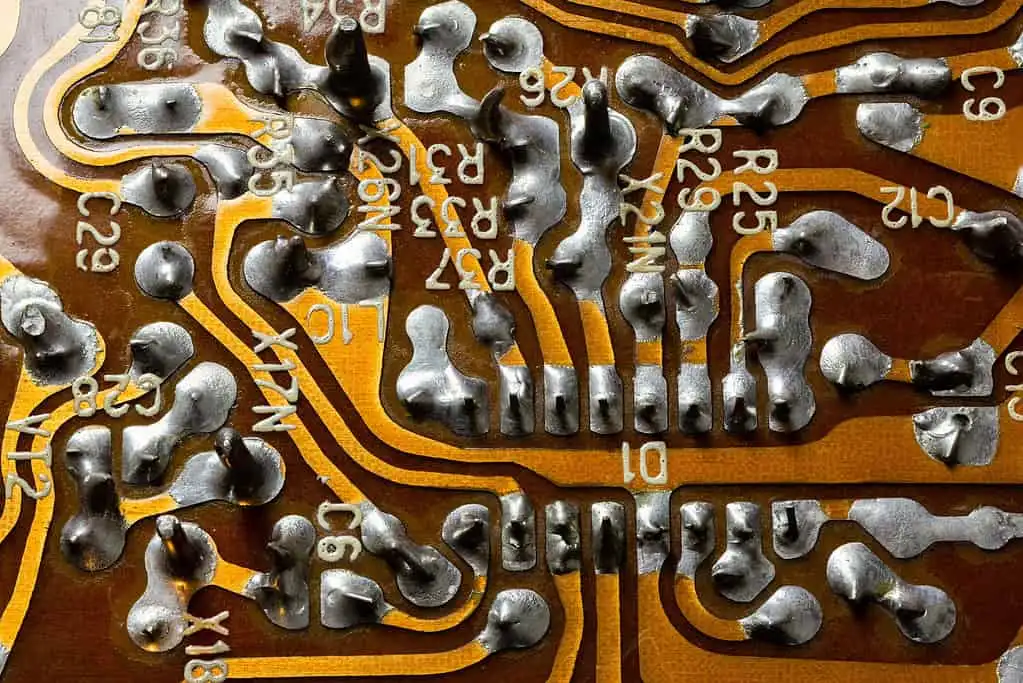
Fabrication and assembly from 1 to 1,000 units with lead times starting at 5 business days. Supports 1–32 layers, 3/3mil trace/space, IPC-A-610 Class 2/3 inspection, and netlist-based electrical testing — no NRE fees, no minimums that punish small orders.
Key Capabilities
🔧
No Minimum Order Penalty
Order 1 board or 1,000 — same process, same quality. We price per board without inflated setup fees that make small batches uneconomical. A 10-piece order of a 4-layer board costs proportionally close to a 100-piece run.
⚡
5-Day Turnaround
Standard lead time is 5 business days for fabrication and 7–10 days for full turnkey assembly. Expedited options at 24 hours (bare board) and 48 hours (assembly) are available when your schedule cannot slip.
📐
1–32 Layer Boards
From simple single-sided boards to 32-layer HDI constructions with blind and buried vias. We support controlled impedance (±10%), via-in-pad, and sequential lamination for complex stackups.
✅
Netlist-Based Electrical Testing
Bare boards undergo flying probe or fixture-based electrical testing per IPC-6012. Assembled boards receive AOI, X-ray for applicable hidden joints such as BGA/QFN, and functional test per the agreed test plan.
📦
Turnkey or Consignment
Full turnkey with component sourcing from authorized distributors (Digi-Key, Mouser, Arrow), or consignment where you supply parts. We handle BOM optimization, alternative sourcing for obsolete parts, and vendor-managed inventory for recurring orders.
📋
IPC-A-610 Class 2/3
Assembly workmanship inspected to IPC-A-610 Class 2 (dedicated service) or Class 3 (high-reliability medical, aerospace, military). Class 3 inspection includes additional criteria for solder fillet size, component alignment, and cleanliness.
Why Low Volume PCB Manufacturing Matters
Most PCB manufacturers optimize for volume — they want 10,000-unit orders and price small batches accordingly. That model works when your design is frozen and demand is predictable. But for the majority of hardware projects, the reality is different: you need 50 boards for validation testing, 200 for a beta program, or 500 for a limited product launch. Those quantities fall into a gap where traditional manufacturers charge premium pricing and online quick-turn services cut corners on quality.
Low volume PCB manufacturing fills that gap by running small batches on the same production lines used for larger orders, with the same quality controls, the same materials, and the same inspection criteria. The difference is in how we handle setup costs: instead of amortizing tooling and programming across 10,000 boards, we use quick-change fixtures, automated optical alignment, and standardized process recipes that minimize changeover time. The result is production-grade boards at quantities that make sense for your project stage.
According to industry data, over 70% of new electronic products never reach volumes above 5,000 units. If your product is in that majority — and most are — you need a manufacturing partner built for that reality, not one that treats your order as an inconvenience.
Technical Specifications
These are the parameters that determine whether a board can be manufactured reliably at low volume. Many competitors publish their maximum capabilities but not their standard process windows — the specs below reflect what we consistently deliver without yield issues.
| Parameter | IPC Standard | Our Capability | Industry Benchmark |
|---|---|---|---|
| Layer Count | IPC-6012 | 1–32 layers | 1–16 layers |
| Min Trace/Space | IPC-6012 Class 3 | 3/3 mil (0.076/0.076mm) | 4/4 mil |
| Min Hole Size | IPC-6012 | 0.15mm (mechanical drill) | 0.20mm |
| Board Thickness | IPC-4101 | 0.4mm – 4.0mm | 0.6mm – 3.2mm |
| Impedance Control | IPC-2141 | ±10% (±5% achievable) | ±10% |
| Surface Finish | IPC-6012 | HASL, ENIG, OSP, ENEPIG, Immersion Silver, Immersion Tin, Hard Gold | HASL, ENIG, OSP |
| Solder Mask | IPC-SM-840 | Green, Red, Blue, Black, Yellow, White, Matte variants | Green, Black, Blue |
| Electrical Testing | IPC-6012 | 100% flying probe or fixture | Sample or fixture only |
Manufacturing Process
Every low volume order follows the same controlled process, whether it is 5 boards or 500. Skipping steps to save time on small batches is how field failures happen — we do not do that.
1
Design Review & DFM Check
We analyze your Gerber files, BOM, and assembly drawings for manufacturability issues before production starts. This includes trace width verification, annular ring adequacy, solder mask clearances, and BOM availability checks. We flag potential issues — like a 0402 component near a board edge that will crack during depaneling — and suggest corrections. This step typically takes 4–8 hours and prevents the majority of first-article failures.
2
Material Sourcing & Preparation
For turnkey orders, we source all components from authorized distributors and verify incoming parts against the BOM. Laminate materials are selected per IPC-4101 grade (FR-4 TG130/170/180, Rogers, Isola, Megtron). Components are verified for correct part number, date code, and moisture sensitivity level (MSL) per JEDEC J-STD-033 before they enter the production floor.
3
PCB Fabrication
Bare boards are manufactured on the same production lines used for volume orders. Inner layer imaging, etching, lamination, drilling, plating, solder mask application, and surface finish are all performed per your stackup specification. Each board receives a unique lot code for traceability. Electrical testing (flying probe for low volume, fixture for higher volume) verifies every net before boards move to assembly.
4
PCB Assembly (SMT + THT)
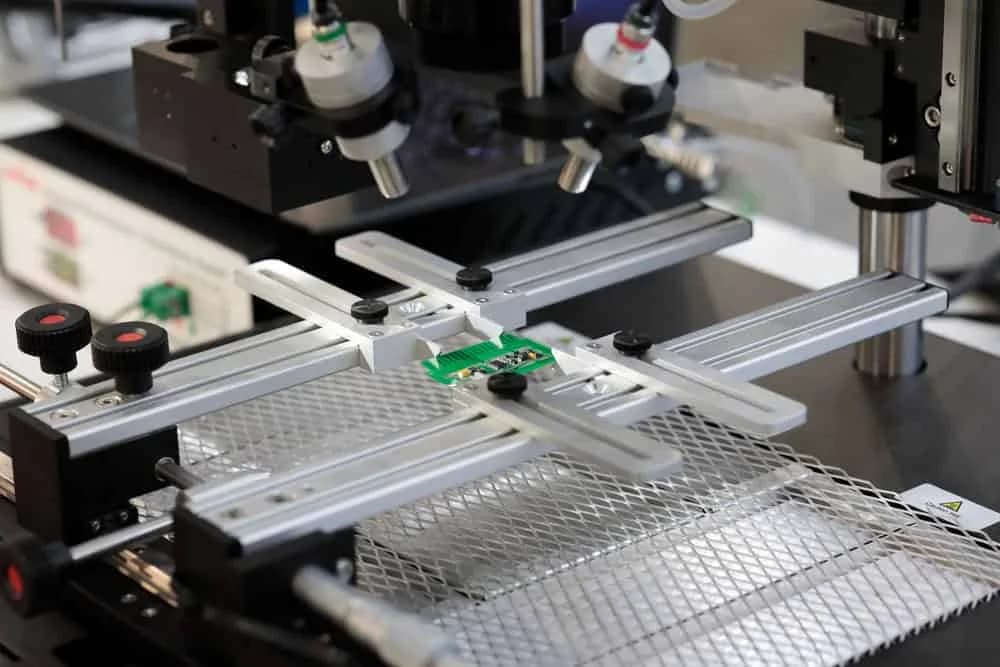
SMT components are placed using automated pick-and-place machines with vision alignment. Reflow soldering follows a profile tailored to your board thickness, component mix, and solder paste specification. Through-hole components are inserted and soldered via selective soldering or wave soldering. For mixed-technology boards, we sequence SMT first, then THT, to avoid thermal damage to through-hole joints.
5
Testing & Quality Inspection
Every assembled board undergoes automated optical inspection (AOI) to check solder joint quality, component presence, and polarity. X-ray inspection is applied to BGA, QFN, and LGA components. ICT (in-circuit test) or functional test is performed per your test specification. Final visual inspection is conducted per IPC-A-610 Class 2 or Class 3, and test reports are generated for each board.
6
Packaging & Shipping
Boards are cleaned (if required), conformal coated (if specified), and packaged in ESD-safe materials with moisture barrier bags for MSL-sensitive assemblies. Each shipment includes a packing list, test reports, material certificates, and CoC (Certificate of Compliance). We ship via DHL, FedEx, or UPS with tracking and can accommodate delivery to multiple destinations for distributed teams.
When Low Volume Manufacturing Is the Right Choice
Not every project needs low volume manufacturing, and not every project can justify high volume tooling. Here is a practical decision framework based on what we see across hundreds of projects:
Choose Low Volume When
- Annual demand is under 1,000 units
- Design is still iterating (expect 2–5 revisions)
- You need bridge production between prototype and mass manufacturing
- Your product serves a niche market with variable demand
- You are validating a new design with real-world testing before committing to volume
- Budget constraints make $5,000+ in tooling impractical
Consider High Volume When
- Annual demand exceeds 5,000–10,000 units consistently
- Design is frozen with no planned changes for 12+ months
- Unit cost optimization is critical to product viability
- You can commit to scheduled deliveries with forecasted demand
- Custom test fixtures and soldering stencils amortize over large runs
- Dedicated production lines reduce lead time to days, not weeks
The crossover point is typically around 1,000–2,000 units per order. Below that threshold, the per-unit savings from volume manufacturing are consumed by tooling costs, minimum material purchases, and inventory carrying costs. Above it, volume efficiencies start to compound. If you are unsure where your project falls, send us your BOM and we will run the numbers for both scenarios.
Case Study: Medical Device Startup — Patient Monitoring System
Challenge
A medical device startup needed 300 units of an 8-layer PCB with controlled impedance (90Ω differential pairs), 0.4mm pitch BGA, and both SMT and through-hole components. Their previous supplier had a 12-week lead time and recurring first-pass yield failures, causing missed clinical trial deadlines. FDA submission required full traceability and IPC-A-610 Class 3 documentation.
Solution
We manufactured the 8-layer boards with Isola 370HR laminate (TG 180°C), ENIG surface finish for wire bonding compatibility, and controlled impedance verified by TDR. Assembly used lead-free SAC305 solder paste with nitrogen reflow. Every board received AOI, X-ray for the BGA, and functional test against the client's test fixture. Full traceability documentation was provided per lot.
Results
First-pass yield recovered to a stable production level, and lead time dropped from 12 weeks to 3 weeks for the initial 300-unit batch. Per-board cost also came down meaningfully versus the previous supplier. The startup submitted their FDA 510(k) supported by our documentation package.
Industries That Rely on Low Volume PCB Manufacturing
Low volume manufacturing is not a compromise — it is the correct production strategy for industries where design complexity, regulatory requirements, or market size make large batches impractical.
Medical Devices
Patient monitors, diagnostic equipment, wearable sensors, and surgical instruments. IPC-A-610 Class 3 inspection, full traceability, and documentation for FDA submissions.
Industrial Automation
PLC controllers, motor drives, sensor interfaces, and IoT gateways. Extended temperature range (-40°C to +85°C) and harsh environment conformal coating options.
Test & Measurement
Oscilloscope front-ends, signal generators, and data acquisition systems. High-precision impedance control and low-loss materials for signal integrity.
Renewable Energy
Solar inverter controllers, battery management systems, and grid-tie interfaces. Heavy copper (up to 6oz) and high-voltage creepage/clearance designs.
Automotive R&D
ECU prototypes, ADAS sensor boards, and EV battery management. AEC-Q200 component sourcing and IATF 16949-compliant processes available.
What Drives Cost in Low Volume PCB Manufacturing
Understanding cost drivers helps you make design decisions that reduce per-unit price without sacrificing quality. Here is what actually moves the needle on a low volume quote:
- Layer count: Each additional pair of layers adds roughly 15–25% to bare board cost. A 4-layer board is typically 2× the price of a 2-layer; an 8-layer is roughly 3.5×. If you can route your design on fewer layers with wider traces, do it.
- Board size: Fabrication cost scales with panel utilization. A 50mm × 50mm board that fits 40-up on a panel costs far less per unit than a 200mm × 200mm board that fits 2-up.
- Surface finish: HASL is the most economical. ENIG adds 20–30% but is necessary for fine-pitch components and wire bonding. ENEPIG adds another 10–15% on top of ENIG and is required for gold wire bonding.
- Component cost: In low volume assembly, components typically represent 60–80% of total cost. BOM optimization — selecting parts with better availability and lower pricing at small quantities — has more impact than any manufacturing cost reduction.
- Minimum line/space: Pushing below 4/4mil increases fabrication cost by 30–50% and reduces yield. Most designs do not need it — check if your routing constraints can be relaxed.
- Controlled impedance: Adds 10–20% for TDR testing and tighter material tolerances. Only specify it for nets that actually carry high-speed signals.
Frequently Asked Questions
What is the minimum order quantity for low volume PCB manufacturing?
Our minimum order quantity starts at 1 piece for bare PCB fabrication and 5 pieces for assembled PCBs. There is no penalty pricing for small orders — we price per board, not per setup, so a 5-piece order costs proportionally close to a 50-piece order minus the amortized tooling.
How much does low volume PCB manufacturing cost?
A 4-layer 100mm × 100mm bare PCB starts around $2–$5 per piece at quantity 10. Assembled boards with components typically range from $15–$80 per piece depending on BOM complexity, component count, and layer count. We provide itemized quotes within 24 hours with no hidden NRE fees.
What files do I need to provide for PCB manufacturing?
For bare board fabrication, we need Gerber files (RS-274X format) and an NC drill file. For assembly, also provide a BOM (bill of materials) in Excel or CSV format and a centroid/pick-and-place file. We accept Altium, KiCad, Eagle, and OrCAD native files and will generate Gerbers at no charge.
What is the typical lead time for low volume PCB production?
Bare PCB fabrication takes 1–3 business days for 1–2 layer boards and 3–5 days for 4–8 layer boards. Full turnkey assembly adds 3–7 business days depending on component availability. Expedited 24-hour fabrication and 48-hour assembly are available for urgent projects.
When should I choose low volume vs high volume PCB manufacturing?
Choose low volume manufacturing when your order is under 1,000 units, when you are still iterating on design, when you need bridge production between prototype and mass manufacturing, or when your product has variable demand. High volume manufacturing (1,000+ units) becomes cost-effective when the design is frozen and demand is predictable, because setup costs amortize over larger quantities.
What certifications and quality standards apply to low volume PCB assembly?
Our facility is ISO 9001:2015 certified and assembly workmanship follows IPC-A-610 Class 2 or Class 3 depending on your application. Bare boards comply with IPC-6012 and IPC-6013 for rigid and flex circuits. We also support UL 94V-0 flammability requirements and RoHS/REACH compliance.
Can you source components for low volume PCB assembly?
Yes, we offer full turnkey assembly with component sourcing from authorized distributors including Digi-Key, Mouser, and Arrow. For low volume runs, we maintain relationships with franchised distributors who support small-quantity orders. We also accept customer-supplied components (consignment) if you prefer.
Related Services
PCB Fabrication Service
DFM-ready bare board fabrication for prototypes, pilot lots, and repeat builds that need stackup, finish, and inspection control before assembly.
PCB Assembly Prototype
Rapid prototype PCB assembly for design validation with lead times from 24 hours. Ideal for first-article builds before committing to low volume production.
Flex Circuit Manufacturer
Custom flex and rigid-flex production for compact devices and bend-critical layouts.
SMD PCB Assembly
High-precision surface mount technology assembly supporting 0201 components, fine-pitch QFPs, and BGA packages with automated optical inspection.
Through-Hole PCB Assembly
Selective and wave soldering for through-hole components including connectors, power devices, and high-reliability applications.
Get Your Low Volume PCB Quote
Send us your Gerber files and BOM — we will return an itemized quote within 24 hours. No minimums, no hidden fees, production-grade quality on every order.
Reviewed by: Engineering Team, YourPCB | Last updated: 2026-04-16

Backed by our Shenzhen SMT factory
26 placement machines · 11 SMT lines
4 nitrogen reflow ovens
100% 3D SPI & AOI inspection
Per-board MES traceability
01005 & PoP in stable production