Service: High Speed Backplane Connectors
High speed backplane connector support for multi-card systems
High-speed connector programs fail when the connector choice, board construction, and assembly method are treated as separate tasks. We help OEM teams align breakout strategy, press-fit planning, power connector integration, and low-volume production release before the first chassis build.
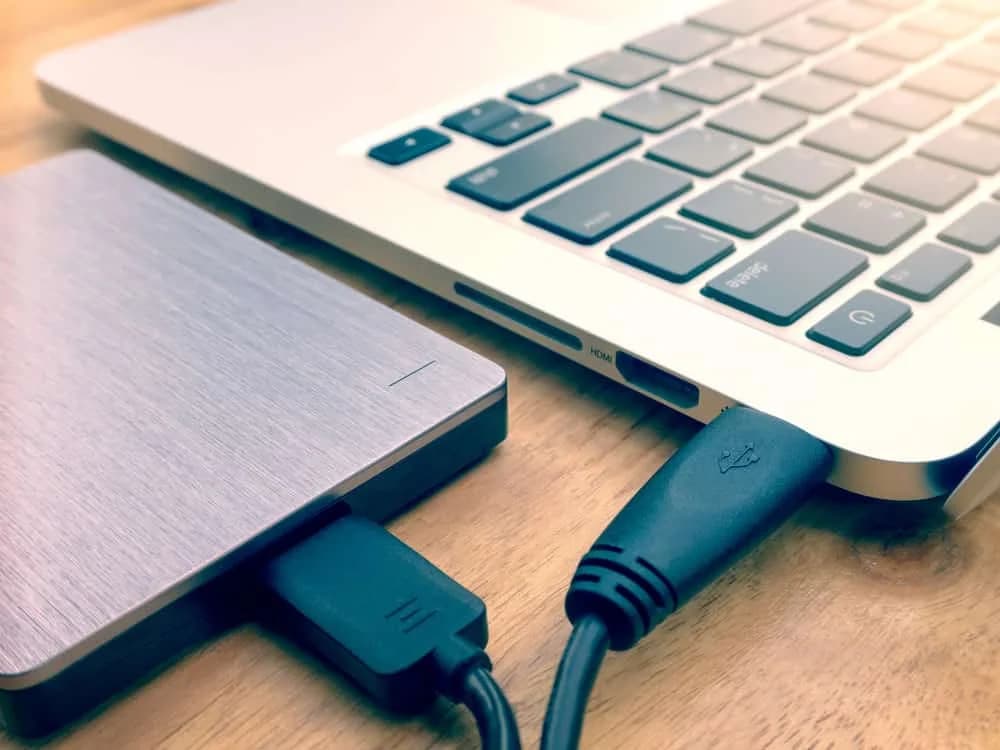
What buyers should watch on high speed backplane connectors
High-speed connector fields sit at the point where board design, chassis mechanics, and assembly yield meet. For useful background, see backplane architecture, signal integrity, and electrical connectors. The connector is part of the channel, part of the mechanical tolerance stack, and often part of the service strategy for the finished platform.
That is why a connector page on its own can still be a real manufacturing service. Many OEM teams already know the board technology they want, but need help deciding whether the chosen connector family, breakout, power hardware, and assembly method can survive a pilot build without expensive rework.
Connector Selection Has To Match the Channel Budget
At 10G, 25G, 56G, and higher data rates, the connector is part of the electrical channel, not just a mechanical interface. Insertion loss, skew.
Mechanical Tolerance Drives Assembly Yield
Large connector arrays magnify positional error. Hole size, plating thickness, coplanarity, board support.
Power and Signal Connectors Change the Release Plan
Programs with separate backplane power connectors need more than current capacity on paper. The release package should define creepage.
Connector integration scope
| Typical scope | High speed backplane connector integration for telecom, compute, industrial control, instrumentation, and defense electronics |
|---|---|
| Connector types | Press-fit backplane connectors, orthogonal pairs, mezzanine systems, daughtercard interfaces, and mixed power plus signal connector layouts |
| Board coordination | Breakout-aware PCB review, stackup alignment, via-transition planning, board-thickness checks, and connector keep-out validation |
| Assembly controls | Insertion-force planning, fixture support, soldering method selection where needed, inspection checkpoints, and serialized release records |
| Related manufacturing | Backplane fabrication, companion-card assembly, selective soldering, hardware installation, harness integration, and box-build support |
| Best fit | Prototype, pilot, bridge, and controlled low-volume programs where connector risk is expensive and early DFM feedback matters |
Design details that usually decide the outcome
Launch Geometry and Return Path
High-speed connector performance depends heavily on the transition from the connector pin field into the PCB routing. Antipad shape, stub control.
Finished Hole and Compliant-Pin Fit
Press-fit systems work only when hole tolerance, plating thickness.
Mixed Power and Signal Planning
Backplane power connectors can change creepage, thermal behavior.
Fixture Support on Large Boards
Large backplanes or long daughtercards can bow during insertion if the tooling does not support the board correctly.
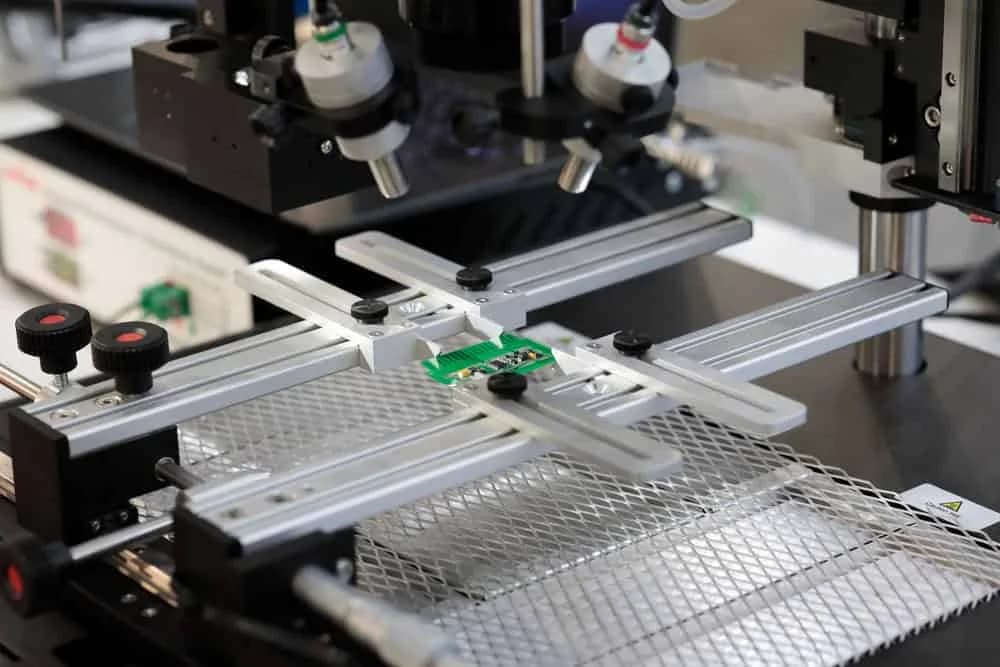
How we move a connector program into production
1
Connector and System Review
We start with the connector family, data-rate target, lane count, power plan, board outline.
2
PCB and Breakout Validation
The connector launch, antipad geometry, reference-plane continuity, via transitions, and finished-hole targets are reviewed against the real board stackup.
3
Assembly Method Definition
We define whether the connector field is press-fit, selective soldered, hand-loaded, or mixed. Tooling support, insertion sequence, board fixturing.
4
Pilot Build and Production Release
Pilot observations are rolled into the release package with any connector-fit notes, board-support requirements, torque values.
Common applications
Networking and Switch Platforms
Dense connector fields linking line cards, control cards, and power shelves in systems where channel loss, skew, and field serviceability all matter.
Industrial Control Chassis
Card-cage systems that need reliable insertion, power distribution, and stable signal routing between controller cards, I/O boards, and field interfaces.
Defense and Rugged Compute
Programs that need strong connector retention, controlled low-volume documentation, and disciplined assembly on mechanically constrained multi-card systems.
Instrumentation and Test Racks
Measurement platforms where connector repeatability, clean breakout strategy, and maintenance-friendly assembly reduce debug time and service risk.
Related services and references
Backplane PCB Manufacturing
Useful when the connector program also needs large-format multilayer backplane fabrication and board-level DFM review.
HDI PCB Manufacturer
Relevant when dense connector breakout or companion-card routing pushes the design toward microvias and higher interconnect density.
Custom PCB Assembly
Helpful for mixed-technology builds where connector variants, programmed parts, or release-controlled assemblies need tighter manufacturing discipline.
Differential Pair Calculator
Useful background when reviewing pair geometry and impedance targets around high-speed connector launches.
PCB Stackup Guide
Helpful when the connector choice affects dielectric selection, layer arrangement, and reference-plane strategy.
ISO 9001 for PCB Manufacturing
Useful for buyers qualifying how document control, inspection records, and corrective action should work on connector-sensitive programs.
Frequently asked questions
What does a high speed backplane connector service include?
It includes connector-family review, channel and breakout planning, press-fit or soldered assembly strategy, stackup coordination, inspection planning, and release support for the finished connectorized backplane or daughtercard set.
Can you support both signal connectors and backplane power connectors?
Yes. Many programs combine high-speed differential connectors with separate power connector positions, bus bars, or heavy-current pins. The manufacturing plan has to check current density, insertion sequence, mechanical support, and how the power and signal hardware interact on the same chassis.
Do high speed backplane connectors always require press-fit assembly?
No. Press-fit is common on large backplanes because it avoids heating a very large board and supports field replacement, but some designs use soldered connectors, mezzanine pairs, orthogonal interfaces, or cable transitions instead.
What files should buyers send for a quote?
The most useful package includes the PCB layout or Gerbers, target stackup, connector part numbers, pin maps, power budget, board thickness, mechanical outline, keep-out notes, and any test or compliance expectations for the assembled system.
What usually causes first-build problems on high speed backplane connectors?
The most common issues are incomplete connector launch review, incorrect finished-hole assumptions for compliant pins, weak reference-plane continuity near long connector fields, unrealistic mating tolerances, and assembly instructions that do not control insertion force or fixture support.
Is this service only for the backplane itself?
No. Many buyers need the backplane, mating cards, and connector hardware reviewed together. The highest-risk failures often sit at the interface between the board design, the connector family, and the production assembly method rather than in a single part alone.
Planning a high-speed connector build?
Send the board files, connector part numbers, stackup target, power budget, and mechanical constraints early. The fastest way to prevent a connector problem is to catch it before the pilot lot is locked.

Backed by our Shenzhen SMT factory
26 placement machines · 11 SMT lines
4 nitrogen reflow ovens
100% 3D SPI & AOI inspection
Per-board MES traceability
01005 & PoP in stable production