Circuit Board Assembly Services
Buyers searching for circuit board assembly services usually need more than a placement line. They need a manufacturing partner who can review the release package, flag sourcing and DFM risk, build across SMT and through-hole processes, and keep the first lot from turning into an expensive documentation exercise.
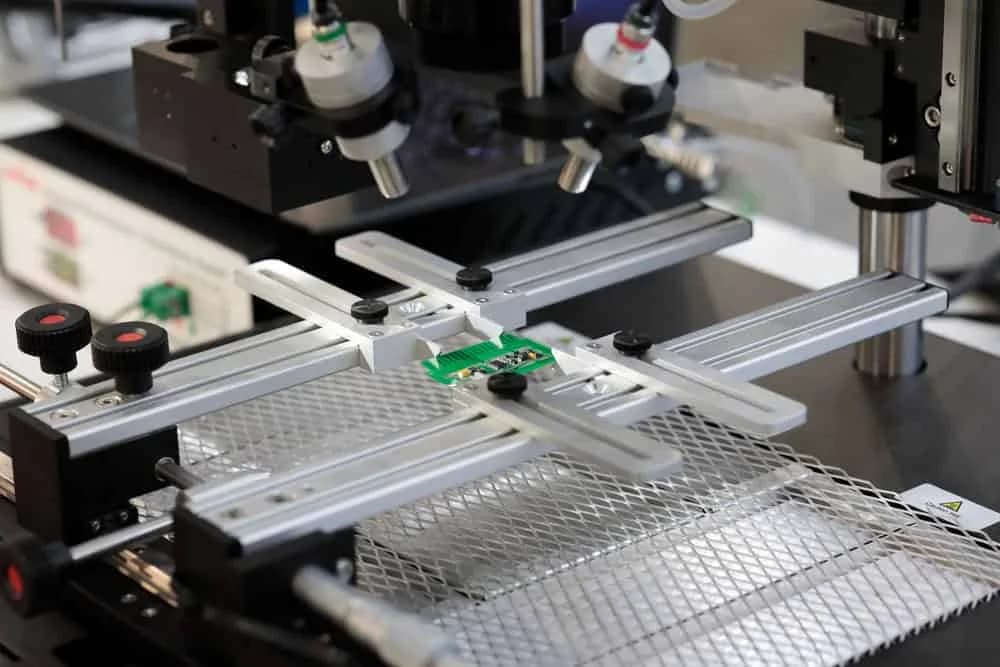
What Buyers Actually Need From Circuit Board Assembly Services
Circuit board assembly is not a single process. Most programs mix surface-mount technology, through-hole assembly, manual hardware installation, and inspection steps that need to be planned as one manufacturing flow. The commercial question is not only whether boards can be populated. It is whether the build package can be released cleanly enough to hold schedule, quality, and cost at the same time.
That is why buyers usually care about documentation quality, BOM risk, alternate-part control, and test readiness before they care about theoretical line speed. In practical terms, the service has to bridge engineering intent and factory execution.
Commercial Scope That Matches the Real Build
A serious assembly quote must reflect sourcing model, inspection depth, test requirements, programming, mechanical hardware.
Process Selection by Package Mix
Boards with BGAs, bottom-terminated parts, heavy connectors, hand-loaded transformers, or press-fit hardware do not all move through one uniform flow.
Prototype-to-Production Continuity
The value of a good assembly partner is not only getting the first lot built. It is capturing what changes between EVT, pilot.
Process and Quality Controls That Matter
Assembly quality depends on more than machine placement. Standards and inspection methods should be matched to the product, the workmanship target, and the actual defect risks on the board. For baseline context, buyers often refer to IPC workmanship standards and automated optical inspection when they define acceptance criteria and coverage expectations.
Typical Control Points
- Stencil and paste strategy for fine-pitch and BTC parts
- Reflow profile alignment to package mix and thermal mass
- Polarity, orientation, and package verification before run
- AOI, X-ray, and visual inspection coverage by risk level
- Hand-solder and selective operations for connectors and power parts
- Electrical, functional, or programming steps when required
Why Those Controls Affect Cost
- Inspection scope changes labor, fixture, and cycle time assumptions
- BGA and bottom-terminated packages change verification methods
- Mixed-technology boards often need extra handling and staging
- Constrained components can force alternate sourcing or partial kitting
- Functional test requirements shape both NPI and repeat-build cost
- Weak documentation always looks cheaper at quote stage than at production stage
How The Assembly Workflow Is Structured
1
Release Review
We check the fabrication package, BOM structure, placement data, assembly notes, and revision alignment before quoting the job as if it were build-ready.
2
DFM and Supply Chain Risk Check
Engineering review focuses on footprint risk, paste and reflow sensitivity, polarity exposure, alternate-part impact.
3
Assembly Planning
The build is mapped to SMT, through-hole, selective hand operations, inspection coverage.
4
Build Feedback and Repeatability
After first articles or pilot lots.
Programs This Service Fits Best
Prototype and EVT Builds
Useful when the team needs fast learning from early assemblies, including solderability concerns, placement issues.
Pilot and Bridge Production
Good fit for products between engineering validation and stable volume production.
High-Mix Industrial Electronics
Mixed-technology industrial boards often combine fine-pitch SMT, power through-hole parts, connectors, cable terminations.
What To Send For Faster Quoting
- •Gerber or ODB++ data with drill files and board outline
- •Bill of materials with manufacturer part numbers and approved alternates
- •XY placement file and assembly drawing
- •Revision notes, quantity breaks, and target lead time
- •Inspection, X-ray, conformal coating, programming, or test requirements
- •Any cable assembly, box build, or final integration scope tied to the board
Related Manufacturing Paths
SMD PCB Assembly
For programs centered on high-density SMT, fine pitch, and BGA-oriented process control.
Through-Hole PCB Assembly
For connector-heavy, power, and mixed-technology boards that need manual or selective soldering control.
Selective Soldering PCB Assembly
For mixed SMT/THT boards where through-hole connectors need localized soldering without exposing bottom-side SMT parts to a full wave.
PCB Assembly Prototype
For fast-turn validation builds where engineering feedback matters as much as the first shipment.
Medical PCB Assembly
For medical device boards that need traceable release records, BGA inspection planning, and tighter documentation control.
Turnkey Electronics Manufacturing
For broader programs that extend past the PCB into sourcing, interconnects, testing, and final integration.
Electronic Assembly Services
For builds that need PCB assembly plus harness mating, programming, labels, inspection, and final release checks.
Frequently Asked Questions
What do you mean by circuit board assembly services?
On this page, circuit board assembly services means the full manufacturing workflow required to populate, inspect, test, and release an electronic assembly. That can include SMT placement, through-hole assembly, mixed-technology soldering, parts sourcing, inspection planning, and support for cables or final integration when the build requires it.
Do you support prototype and low-volume production?
Yes. This service is designed for prototype, pilot, bridge, and repeat low-volume programs where buyers need engineering feedback and production discipline rather than only raw placement capacity.
Can you assemble SMT and through-hole boards in the same program?
Yes. Many products include fine-pitch SMT along with connectors, transformers, power parts, or mechanical hardware that require through-hole or selective manual operations. We plan the build around the actual mix of technologies instead of forcing the board into a single process label.
What files are needed to quote circuit board assembly services?
The fastest quote package includes Gerbers or ODB++, a BOM with manufacturer part numbers, XY placement data, assembly drawings, revision notes, quantity targets, and any inspection, programming, conformal coating, or functional test requirements.
Do you offer turnkey sourcing as part of the service?
Yes. Programs can be quoted as turnkey, consigned, or hybrid. The right model depends on component risk, approved vendor controls, lead time pressure, and whether the customer wants to retain purchasing responsibility for selected line items.
How do you reduce first-build risk on assembled boards?
We focus early on DFM, BOM risk, package-specific assembly constraints, inspection coverage, and test expectations. That prevents avoidable issues such as wrong land patterns, inaccessible probes, thermal imbalance on large copper areas, or sourcing substitutions that change assembly behavior.
Need Circuit Board Assembly Services That Match The Real Build?
Send the board files, BOM, quantity target, and any test or sourcing constraints early. A usable assembly quote comes from a release package that matches the product you actually plan to build, not from a stripped-down checklist that hides the risk.

Backed by our Shenzhen SMT factory
26 placement machines · 11 SMT lines
4 nitrogen reflow ovens
100% 3D SPI & AOI inspection
Per-board MES traceability
01005 & PoP in stable production