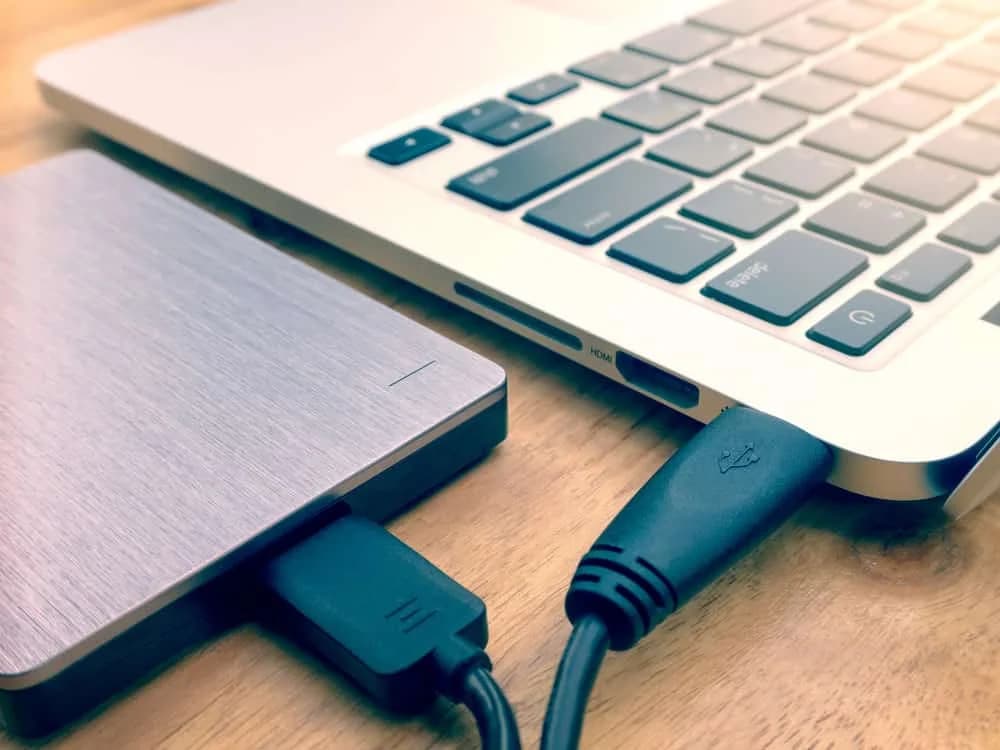
A cable assembly is a bundled group of wires or cables enclosed in a protective sheath with terminated connectors. This guide covers the 7 main types, core components, how cable assemblies differ from wire harnesses, manufacturing steps, cost factors, and selection criteria backed by IPC/WHMA-A-620 standards.
An automotive Tier-1 supplier ordered 5,000 custom cable assemblies using PVC-jacketed cables for an engine compartment application. Within six months, the jackets had cracked from heat cycling above 125°C — the PVC was rated for 80°C max. Replacement with silicone-jacketed assemblies cost $38,000 in rework and delayed the production line by three weeks. A design engineer at a competing firm specified PTFE-jacketed cable assemblies for the same underhood environment from the start. Total added material cost per assembly: $1.85. Zero field failures in two years.
Cable assemblies are among the most underspecified components in electronic and electrical systems. Engineers spend weeks optimizing PCB trace widths and impedance matching, then connect everything with whatever cable assembly "looks right." The result is the leading cause of field failures in interconnect systems, according to IPC/WHMA-A-620 defect data.
This guide covers what a cable assembly actually is, the seven major types, core components, how assemblies differ from wire harnesses, the manufacturing process, cost drivers, and a selection framework you can apply to your next project.
Cable Assembly Definition
A cable assembly is a group of wires or cables bound together inside a protective outer sheath, terminated with connectors at one or both ends, and designed to transmit electrical power, signals, or data between components. The outer sheath — made from materials like PVC, TPE, silicone, or PTFE — provides mechanical protection against abrasion, moisture, chemicals, and electromagnetic interference (EMI).
The key distinction from loose wiring: a cable assembly arrives as a single pre-tested unit ready for plug-in installation. No field stripping, termination, or soldering required. This pre-fabrication reduces installation time by 40–60% compared to point-wiring and eliminates hand-termination defects that account for roughly 23% of interconnect failures per IPC field data.
Expert Insight — Hommer Zhao, Engineering Director: "The biggest mistake I see in cable assembly specification is treating it as an afterthought. Engineers will spend days on PCB trace width calculations but specify the cable assembly in a single sentence on the BOM. That cable carries the same signal — it deserves the same engineering rigor."
Cable Assembly vs Wire Harness: The Key Difference
Cable assemblies and wire harnesses both organize electrical connections, but they solve different problems and suit different environments.
A cable assembly wraps all conductors inside a single unified sheath. The outer jacket is thermoplastic or thermoset material (TPE, PVC, silicone, PTFE) that seals the bundle against moisture, chemicals, UV, abrasion, and temperature extremes. Cable assemblies are built for harsh environments — outdoor installations, engine compartments, industrial floors, and anywhere mechanical or chemical stress threatens exposed wiring.
A wire harness bundles individually sheathed wires using cable ties, tape, loom tubing, or braided sleeving. Each wire retains its own insulation, but the bundle has no unified outer jacket. Wire harnesses organize routing inside protected enclosures — appliances, control panels, consumer electronics — where environmental exposure is minimal.
| Feature | Cable Assembly | Wire Harness |
|---|---|---|
| Outer protection | Unified jacket (PVC, TPE, silicone) | Ties, tape, or loom — no sealed jacket |
| Environmental rating | IP67/IP68 possible | Typically IP20 or unrated |
| Best environment | Outdoor, industrial, automotive | Indoor, enclosed, protected |
| Flexibility | Moderate — jacket adds stiffness | High — individual wires flex freely |
| EMI shielding | Foil/braid integrated in jacket | Added per-wire or not at all |
| Cost per unit | Higher (materials + molding) | Lower (simpler assembly) |
| Typical failure mode | Jacket degradation under chemical/UV | Chafing at routing bends |
If your application involves outdoor exposure, vibration, chemical contact, or IP-rated sealing requirements, specify a cable assembly. If your wiring routes inside a sealed enclosure with no environmental threats, a wire harness with proper materials is lighter, cheaper, and more flexible.
Core Components of a Cable Assembly
Every cable assembly consists of five functional layers. Choosing the wrong material at any layer creates a failure point.
Conductors
Copper is the standard conductor material — specifically annealed copper per ASTM B3 for solid wire or ASTM B174 for stranded. Stranded conductors (7-strand, 19-strand, or rope-lay) handle repeated flex cycles better than solid wire. For high-flex applications like robotic arms, use 42 AWG or finer stranding.
Tinned copper adds corrosion resistance for marine and outdoor use at roughly 5–8% higher cost. Silver-plated copper handles operating temperatures above 200°C where tin plating would degrade.
Insulation
The insulation layer wraps individual conductors. Material choice depends on temperature rating, flexibility, and chemical resistance:
- PVC: Good to 80°C, cheap, adequate for consumer electronics
- XLPE: Cross-linked polyethylene, rated to 90°C, better abrasion resistance
- PTFE (Teflon): Rated to 260°C, excellent chemical resistance, 5–8× the cost of PVC
- Silicone: Rated to 200°C, extremely flexible, ideal for medical and aerospace
- FEP: Fluorinated ethylene propylene, rated to 200°C, low friction coefficient
Shielding
Shielding blocks EMI from corrupting signal integrity. Two primary types:
Foil shield — Aluminum/polyester tape providing 100% coverage. Effective against high-frequency interference (>1 MHz). Lightweight but tears if flexed repeatedly.
Braided shield — Tinned copper braid providing 85–98% coverage depending on braid density. Superior mechanical strength and low-frequency EMI protection. Preferred for flex applications.
For maximum protection, combination foil + braid shielding delivers 100 dB+ attenuation across the full frequency spectrum. Required by MIL-DTL-17 for defense applications.
Connectors
Connectors terminate the assembly and provide the mechanical/electrical interface. The connector determines maximum current, voltage, contact resistance, mating cycles, and environmental sealing.
Common connector families for cable assemblies: Molex Micro-Fit (power distribution), JST-GH/XH (signal), D-sub (legacy data), M12/M8 (industrial), circular MIL-spec (defense), USB/HDMI (consumer data), and Anderson Powerpole (high-current DC).
Connector selection must match wire gauge — a 22 AWG contact crimped onto 18 AWG wire creates a resistive joint that generates heat under load. Always verify the connector manufacturer's wire gauge range.
Outer Jacket
The jacket defines the assembly's environmental envelope. It must withstand every mechanical, thermal, and chemical threat the installation environment presents.
- PVC: General purpose, 80°C, low cost, poor UV resistance
- TPE/TPR: Thermoplastic elastomer, flexible at low temperatures, recyclable
- PUR (Polyurethane): Excellent abrasion and oil resistance, preferred for industrial drag chains
- Silicone: Wide temperature range (-60°C to 200°C), biocompatible for medical
- PTFE: Chemical immunity, highest temperature rating, expensive
- Neoprene (CR): Oil/flame resistant, outdoor rated, common in portable cords
Seven Main Types of Cable Assemblies
1. Power Cable Assemblies
Transmit electrical power from source to load. Built with heavy-gauge conductors (10 AWG and larger), thick insulation rated for 600V or higher, and connectors rated for continuous current draw. Used in industrial machinery, power distribution, EV charging systems, and server racks.
2. Coaxial Cable Assemblies
A center conductor surrounded by dielectric insulation, a conductive shield, and an outer jacket. The concentric geometry maintains consistent impedance — typically 50Ω (RF/test equipment) or 75Ω (video/broadband). Used in telecommunications, broadcast, test and measurement, and antenna feeds.
3. Ribbon/Flat Cable Assemblies
Multiple conductors arranged side-by-side in a flat, ribbon-like configuration. Mass-terminated with IDC (insulation displacement) connectors. Compact, inexpensive, and ideal for short-run internal connections in computers, printers, and control systems. Limited flex life compared to round cables.
4. Fiber Optic Assemblies
Transmit data as light pulses through glass or plastic fibers. Immune to EMI, support bandwidths exceeding 100 Gbps over single-mode fiber, and span distances up to 100 km without signal regeneration. Used in data centers, telecommunications backbone, medical imaging, and industrial sensing.
5. RF/Microwave Cable Assemblies
Specialized coaxial assemblies engineered for frequencies above 1 GHz. Use low-loss dielectrics (solid PTFE, foamed PE, air-spaced), precision connectors (SMA, N-type, 2.92mm), and phase-stable construction. Insertion loss and VSWR specifications are critical. Used in 5G base stations, radar systems, satellite communications, and test equipment.
6. Custom Overmolded Assemblies
Standard cable assemblies with injection-molded strain relief at the connector junction. The overmold — typically PVC, TPE, or silicone — creates a sealed, ruggedized transition zone that prevents flex fatigue at the cable-to-connector interface. IP67/IP68 ratings are achievable. Common in outdoor sensors, marine equipment, and medical devices.
7. Multi-Conductor Control Assemblies
Bundled assemblies containing multiple individually insulated conductors — often 4 to 50+ — within a single jacket. Designed for transmitting multiple signals or low-power circuits through a single cable run. Used in industrial control systems, building automation, and process instrumentation.
Expert Insight — Hommer Zhao, Engineering Director: "I tell engineers to pick the cable assembly type based on the signal, not the form factor. A coax assembly and a twisted-pair assembly might look similar, but their impedance characteristics and shielding effectiveness are completely different. Match the assembly type to your signal integrity requirements first, then optimize for size and cost."
Cable Assembly Manufacturing Process
Manufacturing a cable assembly involves six sequential steps. Each step has specific quality gates defined by IPC/WHMA-A-620 — the industry standard for cable and wire harness assemblies.
Step 1: Design and Engineering — Translate requirements into assembly drawings, bill of materials (BOM), and manufacturing instructions. Define conductor gauge, insulation type, shielding, connectors, length tolerances (typically ±5mm), and test specifications.
Step 2: Wire Cutting and Stripping — Automated cut-strip machines measure wire to length (±1mm tolerance) and strip insulation to expose conductor ends. High-volume lines process 3,000–5,000 cuts per hour.
Step 3: Crimping and Termination — Attach terminals or contacts to stripped conductor ends using calibrated crimp tools. Crimp height and width must fall within manufacturer specifications — a crimp that's 0.1mm too loose creates a resistive joint. Cross-section analysis per IPC/WHMA-A-620 Class 3 verifies the crimp metallurgical bond. For detailed technique, see our crimping guide.
Step 4: Assembly and Routing — Route terminated wires through connectors, splices, and any intermediate components (ferrite cores, inline fuses, shielding). Assemble on a fixture board or harness jig that enforces routing paths and branch lengths.
Step 5: Overmolding or Jacketing — Apply the outer sheath. Extrusion jacketing for continuous lengths; injection molding for overmolded strain reliefs at connector transitions. Mold temperature, pressure, and cure time are process-critical parameters.
Step 6: Testing and Inspection — Every completed assembly passes electrical and mechanical tests:
- Continuity test: Verifies every conductor path end-to-end
- Hi-pot (dielectric withstand): Applies 1,000–2,500V between conductors and between conductors and shield to detect insulation defects
- Impedance/TDR test: For signal assemblies, verifies characteristic impedance within ±2Ω tolerance
- Pull test: Confirms crimp and solder joint mechanical strength (minimum 10N for 26 AWG per IPC-A-620)
Cable Assembly Cost Factors
Cable assembly pricing varies from under $1 for a simple 2-pin consumer cable to over $500 for a complex mil-spec multi-conductor assembly. Seven factors drive the cost:
| Cost Factor | Impact on Price | Example |
|---|---|---|
| Conductor material | Copper type + plating adds 15–40% | Silver-plated vs bare copper |
| Insulation/jacket | PTFE costs 5–8× more than PVC | Medical-grade silicone vs PVC |
| Connector type | Mil-spec connectors cost 10–50× commercial | MIL-DTL-38999 vs Molex Micro-Fit |
| Shield complexity | Foil + braid adds $0.30–$1.50/ft | Dual-shield coax vs unshielded |
| Assembly length | Longer = more material + handling time | 6-inch vs 6-foot assembly |
| Volume | 10,000+ units can cut cost 40–60% | Prototype vs production pricing |
| Testing requirements | Hi-pot + TDR adds $0.50–$3.00/unit | Consumer vs aerospace testing |
For budget planning, expect $2–$8 per unit for high-volume standard assemblies (10,000+), $15–$50 for low-volume custom assemblies (100–1,000), and $75–$300+ for mil-spec or certified medical assemblies at any volume.
Expert Insight — Hommer Zhao, Engineering Director: "The connector is almost always the single biggest cost driver — not the cable itself. I've seen projects where switching from a $12 mil-spec circular connector to a $0.80 industrial M12 cut assembly cost by 60%, with zero performance difference for that application. Always question whether the connector spec matches the actual operating requirements."
How to Select the Right Cable Assembly
Use this decision checklist to narrow your specification:
1. Define the electrical requirement — What voltage, current, frequency, and impedance does the cable carry? This determines conductor gauge (use wire gauge calculators for current capacity) and shielding type.
2. Map the environment — Temperature range, moisture exposure (IP rating needed?), chemical contact, UV exposure, flex cycles. This selects insulation, jacket, and connector materials.
3. Set mechanical constraints — Bend radius, pull force on connectors, cable OD limits, weight budget. Overmolded assemblies add 20–30% to OD but triple connector flex life.
4. Choose the connector family — Match mating cycles (100 for prototype, 10,000+ for production test fixtures), pin count, current per contact, and locking mechanism to your interface requirements.
5. Specify testing level — IPC/WHMA-A-620 Class 1 (general electronics), Class 2 (dedicated service), or Class 3 (high-reliability) determines inspection criteria and acceptable defect rates.
6. Validate with prototypes — Order 5–10 prototype assemblies and test in actual operating conditions before committing to production tooling. Prototype cost is 3–5× production cost but catches specification errors before they scale.
Key Standards and Certifications
Three standards govern cable assembly quality worldwide:
IPC/WHMA-A-620 — Requirements and Acceptance for Cable and Wire Harness Assemblies. Defines workmanship standards for crimping, soldering, routing, and assembly across three acceptance classes. This is the industry's primary quality reference.
UL (Underwriters Laboratories) Certification — Product safety certification for cables and assemblies sold in North America. UL 2556 covers wire and cable test methods; UL 486A/B covers wire connectors. Required for any assembly used in listed equipment.
ISO 9001 / IATF 16949 — Quality management system certifications. ISO 9001 covers general manufacturing; IATF 16949 adds automotive-specific requirements. Most OEMs require one or both from cable assembly suppliers.
Limitations: When a Cable Assembly Isn't the Right Choice
Cable assemblies add cost, stiffness, and minimum bend radius that can work against you in certain applications. If your wiring routes entirely inside a sealed enclosure with no environmental exposure — like a control panel or consumer appliance — a wire harness is lighter, cheaper, and more flexible. For very short board-to-board connections under 10 cm, flexible printed circuits (FPCs) eliminate connectors entirely and save vertical space. For prototype-stage projects where the design is still changing weekly, using individual wires with quick-disconnect terminals lets you iterate faster than ordering custom assemblies with 2–3 week lead times.
Frequently Asked Questions
What is a cable assembly and how does it differ from a loose wire bundle?
A cable assembly is a pre-fabricated, pre-tested unit of wires or cables enclosed in a protective jacket and terminated with connectors. Unlike a loose wire bundle, it arrives ready for plug-in installation — no field stripping, crimping, or soldering needed. The outer jacket provides mechanical protection, environmental sealing, and often EMI shielding that loose wires lack.
I'm designing a sensor system that operates outdoors in -20°C to 85°C — should I use a cable assembly or a wire harness?
For outdoor use across that temperature range, a cable assembly is the right choice. Specify a TPE or silicone jacket rated for -40°C to 125°C with IP67-rated connectors. A wire harness would leave individual wires exposed to moisture, UV degradation, and thermal cycling that causes insulation cracking. The cable assembly's unified jacket seals against all three threats.
What are the main types of cable assemblies and which one do I need?
The seven main types are: power, coaxial, ribbon/flat, fiber optic, RF/microwave, custom overmolded, and multi-conductor control. Your choice depends on what you're transmitting. Power delivery uses power cable assemblies with heavy-gauge conductors. High-frequency signals need coaxial or RF assemblies with controlled impedance. Multiple low-power control signals route through multi-conductor assemblies. Data-intensive applications at distance use fiber optic assemblies.
How much does a custom cable assembly cost, and what drives the price?
Custom cable assembly cost ranges from $2–$8 per unit at high volume (10,000+) to $75–$300+ for low-volume mil-spec assemblies. The single biggest cost driver is the connector — mil-spec connectors can cost 10–50× more than commercial equivalents. Other major factors: conductor material and plating, jacket material (PTFE vs PVC is a 5–8× difference), shielding complexity, and required testing level.
How do I verify that a cable assembly manufacturer meets quality standards?
Ask for IPC/WHMA-A-620 certification and verify which acceptance class they manufacture to (Class 1, 2, or 3). Request UL certification for North American markets. Check for ISO 9001 at minimum, or IATF 16949 for automotive applications. Ask to see crimp cross-section analysis records and hi-pot test data from recent production runs — these reveal actual manufacturing discipline better than any certificate.
References
- IPC/WHMA-A-620 Standard — IPC (Institute for Printed Circuits)
- UL Wire and Cable Standards — UL (Underwriters Laboratories)
- Cable Assembly Market Report — Fortune Business Insights
- Cable Assembly Manufacturing Guide — Epec Engineered Technologies
Get Expert Help With Your Cable Assembly Project
Selecting the right cable assembly specification saves thousands in rework and field failures. Whether you need help choosing between assembly types, validating connector selection, or reviewing your cable assembly BOM, our engineering team can help. Contact us for a free design review or visit our PCB tools to start calculating your electrical requirements.
Need Help with Your PCB Design?
Check out our free calculators and tools for electronics engineers.
Browse PCB Tools