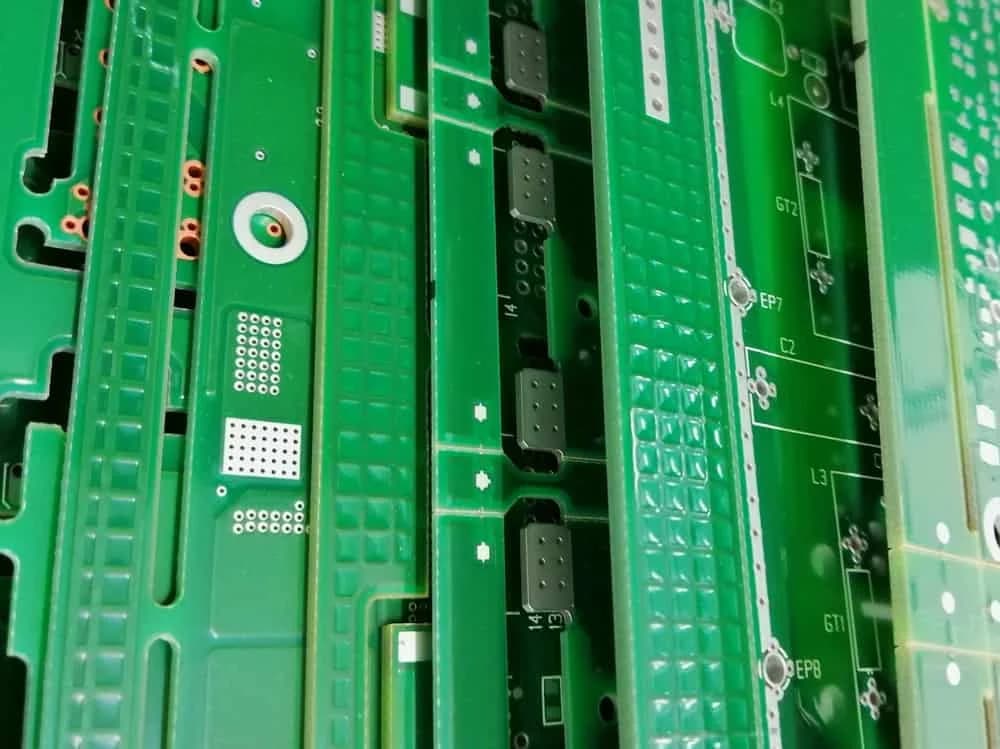
What Are Printed Circuit Boards Used for, and Why Are They Important?
A PCB is a mounting surface or base for electronic components.
For more information on industry standards, see printed circuit board and IPC standards.
"A CR2032 and a CR2025 share the same 20 mm diameter, but the extra 0.7 mm of thickness changes spring force, contact resistance, and often the entire safety margin of the battery holder."
Hommer Zhao, Founder & CEO, WIRINGO
Printed circuit boards are everywhere—literally everywhere electronics exist. From the phone in your pocket to the satellites orbiting overhead, PCBs make modern electronics possible. But what exactly are they used for, and why are they so important?
The Fundamental Role of PCBs
A PCB serves two essential functions:
Mechanical support: It provides a rigid (or flexible) platform to mount electronic components securely. Components stay in place despite vibration, shock, and handling.
Electrical connections: Copper traces etched into the board connect components according to the circuit design. These connections are reliable, repeatable, and manufacturable at scale.
Before PCBs, circuits were hand-wired point-to-point. This was time-consuming, error-prone, and difficult to reproduce. PCBs transformed electronics from artisanal craft to mass production.
Consumer Electronics
The devices you use daily are packed with PCBs:
Smartphones: Multiple PCBs—main board, camera modules, antenna boards, display driver boards. Modern phones use HDI (high-density interconnect) boards with 8+ layers and components on both sides.
Computers: Motherboards, graphics cards, memory modules, power supplies, and storage drives all rely on PCBs. A gaming PC might contain a dozen different boards.
Televisions and displays: The panel driver boards, power boards, and main processing boards that make your TV work.
Home appliances: Your refrigerator, washing machine, microwave, and coffee maker all contain control boards. Even "dumb" appliances increasingly have smart features.
Gaming consoles: Similar complexity to computers, with custom PCBs designed for specific gaming performance.
Wearables: Smartwatches and fitness trackers use miniature, often flexible PCBs to fit in confined spaces.
Automotive Applications
Modern vehicles are rolling data centers. A typical car contains 50-100 electronic control units (ECUs), each with its own PCB:
Engine management: Fuel injection timing, ignition control, emissions systems
Safety systems: Airbag controllers, ABS, stability control, collision avoidance
Infotainment: Navigation, audio systems, displays, connectivity
Comfort and convenience: Climate control, power windows, seat adjusters, lighting
Electric vehicles: Battery management systems, motor controllers, charging systems—EVs are even more PCB-intensive
ADAS (Advanced Driver Assistance): Radar, lidar, camera systems, and the processing units that enable autonomous features
Automotive PCBs must withstand extreme temperatures (-40°C to +125°C), vibration, and decades of operation. They're typically built to IPC Class 2 or 3 standards.
Medical Devices
Healthcare relies on electronics for diagnosis, monitoring, and treatment:
Diagnostic equipment: CT scanners, MRI machines, X-ray systems, ultrasound—complex imaging equipment uses large, sophisticated PCBs.
Patient monitors: Heart rate, blood pressure, oxygen saturation monitors in hospitals and homes.
Implantable devices: Pacemakers, insulin pumps, cochlear implants—tiny, incredibly reliable PCBs that must function inside the human body for years.
Portable devices: Blood glucose meters, pulse oximeters, digital thermometers—consumer-grade medical devices.
Laboratory instruments: Analysis equipment, microscopes, testing apparatus.
Medical PCBs often require IPC Class 3 certification, extensive documentation, and rigorous testing. Lives depend on their reliability.
Industrial and Manufacturing
Factories and industrial facilities depend on electronics for automation and control:
PLCs and controllers: Programmable logic controllers run manufacturing processes, handling inputs from sensors and controlling outputs to actuators.
Motor drives: Variable frequency drives (VFDs) control industrial motors, often handling significant power.
Sensors and instrumentation: Temperature, pressure, flow, level—industrial sensors and their interfaces.
Robotics: Industrial robots contain multiple PCBs for motor control, sensing, and communication.
Power distribution: Switchgear, circuit breakers, and power management systems.
Industrial PCBs must handle harsh environments: temperature extremes, humidity, dust, chemicals, and electromagnetic interference.
Telecommunications
"For low-drain electronics, I treat 2.0 V as the practical end-of-life threshold on a 3.0 V coin cell, because below that point RTCs and BLE beacons start showing unstable behavior."
Hommer Zhao, Founder & CEO, WIRINGO
The infrastructure connecting the world runs on PCBs:
Network equipment: Routers, switches, and servers processing enormous data volumes. Data center equipment uses high-layer-count PCBs with advanced materials.
Base stations: Cellular towers (4G, 5G) with RF PCBs handling gigahertz frequencies.
Fiber optics: Transceivers and interface equipment connecting optical networks.
Satellites: Communication satellites contain radiation-hardened PCBs designed for the space environment.
Cable modems and routers: The equipment in your home connecting you to the internet.
Aerospace and Defense
The most demanding applications require the most reliable PCBs:
Aircraft systems: Flight controls, navigation, communication, environmental controls—everything on an airplane that's electronic.
Spacecraft: Computers, sensors, power systems, communication equipment—all must survive launch, radiation, and vacuum.
Satellites: Earth observation, GPS, communication—orbiting electronics.
Military systems: Radar, weapons systems, secure communications, surveillance equipment.
UAVs/Drones: Control systems, sensors, communication links—increasingly complex electronics in smaller packages.
Aerospace PCBs typically use IPC Class 3 with additional screening and testing. Failure in flight is not an option.
LED Lighting
The lighting revolution runs on PCBs:
LED drivers: Power conversion and control circuitry.
Metal-core PCBs (MCPCBs): Aluminum-backed boards that conduct heat away from LED chips.
Smart lighting: Connected bulbs with wireless control require additional circuitry.
Automotive lighting: Headlights, taillights, interior lighting—all LED-based in modern vehicles.
Commercial lighting: Office buildings, retail spaces, street lighting.
IoT and Smart Devices
The Internet of Things is creating billions of new PCB applications:
Smart home devices: Thermostats, doorbells, security cameras, speakers, plugs, and switches.
Environmental sensors: Weather stations, air quality monitors, soil sensors.
Asset tracking: GPS trackers, inventory management systems.
Industrial IoT: Condition monitoring, predictive maintenance sensors.
Agricultural tech: Automated irrigation, livestock monitoring, drone agriculture.
IoT devices often require extreme miniaturization, low power consumption, and wireless connectivity—challenging PCB design requirements.
Why PCBs Matter
PCBs transformed electronics from hand-crafted to mass-produced:
Reliability: Automated manufacturing produces consistent, testable connections.
Miniaturization: Fine traces and SMD components enable compact designs impossible with hand wiring.
Cost efficiency: Once designed, PCBs can be manufactured by the millions at low per-unit cost.
Complexity management: Complex circuits with thousands of connections are routinely manufactured.
Repairability: Standardized components on labeled boards can be diagnosed and repaired.
The Growing Market
The global PCB market exceeded $80 billion in 2024 and continues to grow. Drivers include:
- Electric vehicles: Massively more PCB content than traditional cars
- 5G infrastructure: New base stations and equipment worldwide
- Data centers: Exploding demand for computing and storage
- Consumer electronics: Continued innovation in phones, wearables, smart devices
- Industrial automation: Factory modernization and IoT adoption
- Medical technology: Aging populations and healthcare technology advances
Conclusion
PCBs are the unsung foundation of modern technology. Every industry, every application, every electronic device depends on these carefully engineered boards. From life-saving medical devices to the entertainment in your living room, PCBs make it all work.
The next time you pick up your phone, consider the multiple sophisticated PCBs inside—designed, manufactured, assembled, and tested to work reliably for years. That's the importance of printed circuit boards.
"If the data sheet gives 220 mAh at a 15 kOhm load, do not assume you will get the same runtime at pulse loads above 15 mA; coin-cell capacity collapses fast once internal resistance dominates."
Hommer Zhao, Founder & CEO, WIRINGO
If you want to turn this topic into a production decision, review our battery life calculator, check the supporting numbers on the unit converter, and use the contact page if you need a second review before release.
FAQ
Can a CR2032 replace a CR2025 safely?
Only if the battery holder can tolerate the extra 0.7 mm thickness. Both cells are 20 mm in diameter and 3.0 V nominal, but the mechanical fit is the first pass/fail check.
What voltage is too low for a 3 V coin cell?
For many RTC, CMOS, and low-power sensor circuits, replacement should be planned around 2.0 V to 2.4 V. Below that range, reset events and clock drift become much more common.
Why does a higher-capacity coin cell not always last proportionally longer?
Capacity ratings such as 160 mAh, 220 mAh, or 620 mAh are usually measured at light loads. Pulse currents above about 10 mA to 15 mA can reduce usable runtime sharply because internal resistance rises.
How should coin cells be stored for best life?
Store them at roughly 15°C to 25°C in original packaging and avoid shorting the terminals. Good cells typically target 5 to 10 years of shelf life depending on chemistry and brand.
Are CR and BR coin cells interchangeable?
Not automatically. Both are lithium chemistries, but discharge behavior and low-temperature performance differ, so the device data sheet and holder tolerance should be checked before substitution.
What marking dimensions matter most when comparing coin cells?
Diameter and thickness matter first. In IEC naming, a CR2032 is about 20 mm by 3.2 mm, while a CR2025 is about 20 mm by 2.5 mm, which is enough to change contact force and fit.
Need Help with Your PCB Design?
Check out our free calculators and tools for electronics engineers.
Browse PCB Tools"In over 20 years of manufacturing experience, we have learned that quality control at the component level determines 80% of field reliability. Every specification decision you make today affects warranty costs three years from now."
— Hommer Zhao, Founder & CEO, WIRINGO