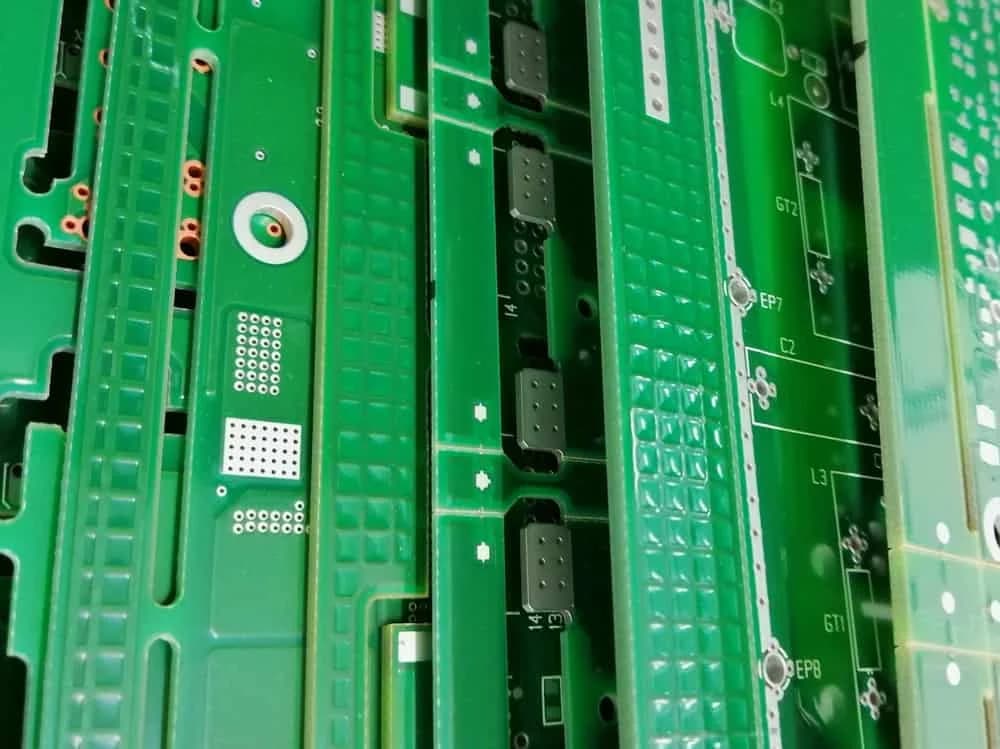
PCBs are composed of several materials working together. Learn about the substrates, copper, and other materials used...
For more information on industry standards, see printed circuit board and IPC standards.
"When a digital interface starts failing randomly, I check the numbers before the theory: supply tolerance, edge rate, and the actual 2.4 GHz or DDR clock environment usually explain the behavior faster than guesswork."
Hommer Zhao, Founder & CEO, WIRINGO
Printed circuit boards are engineered composites of several materials, each serving specific electrical and mechanical functions. Understanding these materials helps you make better design decisions.
Core Substrate Materials
FR4 (Flame Retardant 4)
FR4 is the most common PCB substrate, accounting for over 90% of all PCBs manufactured.
Composition: Woven fiberglass cloth impregnated with flame-retardant epoxy resin.
Properties:
- Dielectric constant: 4.2-4.5
- Glass transition temperature: 130-140°C
- Good mechanical strength
- Excellent electrical insulation
- Cost-effective
Limitations: Not suitable for high-frequency (>1 GHz) or high-temperature applications.
High-Frequency Materials
For RF and microwave applications, specialized materials are used:
Rogers (RO4003C, RO4350B): Lower dielectric constant, tighter tolerance, stable over temperature and frequency.
PTFE (Teflon): Excellent high-frequency performance but difficult to process.
Isola: Various high-speed materials for different performance needs.
High-Temperature Materials
Polyimide: Withstands temperatures up to 250°C, used in flex PCBs and high-temperature applications.
Ceramic substrates: Aluminum oxide (Al₂O₃) or aluminum nitride (AlN) for extreme temperature and thermal management.
Copper Layers
Copper provides the conductive pathways. It's measured in ounces per square foot.
| Copper Weight | Thickness | Typical Use |
|---|---|---|
| 0.5 oz | 17.5 µm | HDI, fine pitch |
| 1 oz | 35 µm | Standard (most common) |
| 2 oz | 70 µm | Higher current |
| 3 oz | 105 µm | Power electronics |
| 4+ oz | 140+ µm | High power |
Copper Types:
- Electrodeposited (ED): Standard, slightly rough surface
- Rolled Annealed (RA): Smoother, used for flex PCBs
"A memory or wireless design is only as stable as its margins. If voltage sags more than 5% or timing budget falls under a few nanoseconds, intermittent faults stop being surprising."
Hommer Zhao, Founder & CEO, WIRINGO
Prepreg and Core
Core: Cured laminate with copper on both sides. The base building block.
Prepreg (Pre-impregnated): Uncured fiberglass/resin sheets used to bond layers together during lamination.
Multi-layer boards stack cores and prepreg, then cure under heat and pressure.
Solder Mask
The colored coating covering most of the PCB (typically green).
Function:
- Protects copper from oxidation
- Prevents solder bridges during assembly
- Provides electrical insulation
- Identifies PCB manufacturer/quality
Types:
- Liquid photoimageable (LPI) - most common
- Dry film - for complex topographies
- Spray coating - lower cost
Colors: Green (standard), blue, red, black, white, yellow, matte versions.
Silkscreen
The legend layer with component designators, logos, and markings.
Function:
- Component reference designators (R1, C2, U3)
- Polarity markings
- Company logos and part numbers
- Assembly instructions
Colors: White (on dark masks), black or yellow (on light masks).
Surface Finish
Protects exposed copper pads and enables soldering.
| Finish | Shelf Life | Cost | Notes |
|---|---|---|---|
| HASL | 12 months | $ | Lead or lead-free, not flat |
| ENIG | 12+ months | $$$ | Flat, good for fine pitch |
| OSP | 6 months | $ | Organic, shortest shelf life |
| Immersion Silver | 6 months | $$ | Good solderability |
| Immersion Tin | 6 months | $$ | Flat, whisker concerns |
Complete Layer Stack
A typical 4-layer board consists of:
- Silkscreen (top)
- Solder mask (top)
- Copper layer 1 (signal)
- Prepreg
- Copper layer 2 (ground plane)
- Core
- Copper layer 3 (power plane)
- Prepreg
- Copper layer 4 (signal)
- Solder mask (bottom)
- Silkscreen (bottom)
Conclusion
FR4 substrate, copper foil, solder mask, and silkscreen form the basic PCB structure. Material selection depends on electrical requirements (frequency, current), thermal needs, mechanical constraints, and cost considerations. Most applications work well with standard FR4, but specialized applications may require high-frequency or high-temperature materials.
"For embedded electronics, the cleanest debug path is to tie every recommendation back to a measurable limit, whether that is JEDEC timing, 802.11 channel width, or the battery voltage floor."
Hommer Zhao, Founder & CEO, WIRINGO
If you want to turn this topic into a production decision, review our electronics glossary, check the supporting numbers on the unit converter, and use the contact page if you need a second review before release.
FAQ
How much RAM does a typical modern system need?
For light office work, 8 GB is often the floor, while content creation, CAD, and simulation workloads commonly start at 16 GB to 32 GB for stable multitasking.
What wireless band should I use for a Raspberry Pi or IoT device?
2.4 GHz usually offers better range, while 5 GHz reduces congestion and increases throughput. The better choice depends on wall loss, channel width, and the actual standard such as 802.11n or 802.11ac.
Why does memory speed matter less than latency in some systems?
Bandwidth helps large transfers, but real application response often depends on timing parameters and controller efficiency. That is why two kits with the same MT/s rating can perform differently.
How can I reduce intermittent electronics faults?
Start with measured supply rails, temperature, and timing margins. A supply droop of more than 5% or a repeated thermal rise above the design limit often explains unstable behavior quickly.
Which standards should I check for electronics compatibility?
That depends on the product: JEDEC applies to memory conventions, IEEE 802.11 to Wi-Fi, and IEC or UL safety rules may apply to the power side.
When should I move from a generic guide to lab validation?
As soon as the design has a measurable requirement such as throughput, thermal rise, or standby current. One bench test with logged data is worth more than several rounds of assumptions.
Need Help with Your PCB Design?
Check out our free calculators and tools for electronics engineers.
Browse PCB Tools"In over 20 years of manufacturing experience, we have learned that quality control at the component level determines 80% of field reliability. Every specification decision you make today affects warranty costs three years from now."
— Hommer Zhao, Founder & CEO, WIRINGO