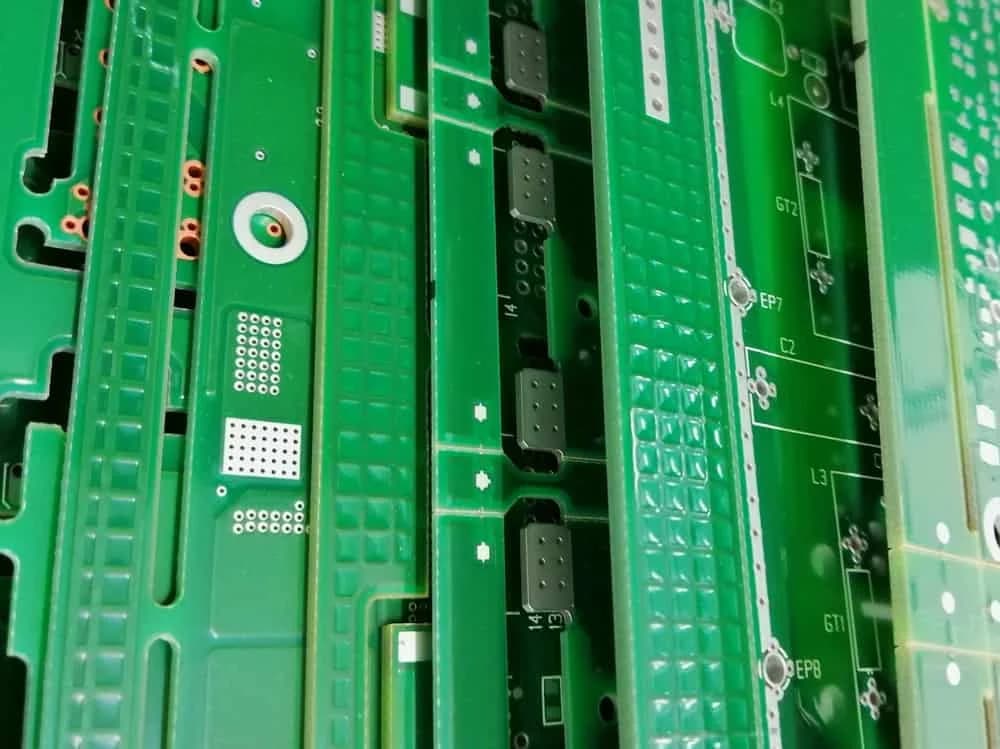
High-Volume PCB Manufacturing RFQ: What Buyers Must Freeze Before 600,000 Units per Year
High-volume PCB manufacturing RFQs need frozen files, impedance targets, acceptance class, capacity plans, and logistics assumptions before price comparison.
For more information on industry standards, see printed circuit board and IPC standards.
A high-volume Cat6a PCB RFQ might be quoted at around 600,000 units per year with delivery on CIF terms to a buyer-nominated EU sea port. The first challenge is not drilling or solder mask. The RFQ needs enough frozen data to make a yearly price credible: Gerbers, stackup, impedance targets, panel rules, acceptance class, packaging, and the ramp plan behind that annual number.
High-volume PCB manufacturing RFQs should freeze technical data, yield assumptions, logistics terms, and quality evidence before price comparison. For a Cat6a or connector-board program, the buyer should define impedance targets, IPC acceptance level, copper thickness, finish, panelization limits, sampling gates, and delivery terms before asking suppliers to hold annual pricing.
TL;DR
- Treat 600,000 units per year as a capacity plan, not a single line-item quote.
- Freeze Gerbers, stackup, impedance coupons, panelization, and acceptance class before supplier comparison.
- Use IPC-6012, IPC-A-600, and IPC-J-STD-001 references where bare board and assembly risks overlap.
- Ask for a ramp table by month, not only a yearly total.
- Lock Incoterms, carton rules, moisture protection, and label format before sea freight pricing.
This guide is written for sourcing managers, hardware engineers, and NPI teams who already have a PCB design and are moving from quote collection to supplier nomination. I am writing from the role of a senior factory engineer with 18 years of PCB fabrication, SMT assembly, wire harness, cable assembly, and box-build production experience. The objective is to show what must be frozen before a high-volume PCB RFQ becomes a repeatable manufacturing program.
A high-volume PCB RFQ is a manufacturing quotation package that links design files, quality requirements, annual demand, and delivery terms into one supplier decision. A Cat6a PCB is a controlled-geometry interconnect board used in high-speed Ethernet hardware where trace geometry, dielectric selection, and connector interface quality affect channel performance. Controlled impedance is a PCB fabrication requirement that targets a defined trace impedance, often 50 ohm single-ended or 100 ohm differential, by controlling copper width, dielectric height, copper thickness, and laminate properties.
For standards context, IPC electronics standards explain the organization behind IPC-6012 printed board qualification, IPC-A-600 bare-board acceptability, and IPC-J-STD-001 soldering workmanship. ISO 9001 gives context for process control and corrective-action systems, while UL helps frame recognized materials and safety-file expectations when flame rating or UL marking appears on the drawing.
Why Annual Volume Alone Is Not Enough
A buyer may write 600,000 units per year in the RFQ and expect a clean price ladder. A factory still has to translate that number into laminate buys, drill capacity, imaging slots, surface-finish planning, electrical test load, packing labor, and freight cadence. A yearly total without monthly release logic can hide a 3:1 demand swing between quarters.
On this kind of RFQ, a CIF sea-transport delivery term also changes the quote logic. Sea freight needs carton density, pallet height, moisture barrier expectations, lead-time buffer, and export documentation assumptions. A supplier cannot price that cleanly if the buyer only sends a board outline and an annual forecast.
Files Buyers Should Freeze Before Quote Comparison
A high-volume quote should start with a controlled file package. The minimum set is not complicated, but it must be revision-locked.
- Gerber or ODB++ package with board outline, copper layers, solder mask, legend, drill files, slots, and route details.
- Fabrication drawing with material, layer count, finished thickness, copper weight, finish, impedance notes, tolerances, and acceptance class.
- Netlist or IPC-D-356 file for electrical test comparison.
- Stackup proposal or approved stackup with dielectric thickness, copper distribution, and impedance coupon expectations.
- Panelization constraints, including rail width, breakaway method, tooling holes, fiducials, and maximum panel size.
- Packaging rules covering ESD bags, desiccant, humidity indicator cards, carton weight, labels, and pallet limits.
If the RFQ includes assembly, add BOM, centroid, assembly drawing, programming instructions, and test requirements. The related sourcing work is close to our PCB RFQ checklist, but high volume needs one more layer: capacity and release discipline.
Decision Table for a High-Volume PCB RFQ
| RFQ item to freeze | Why it changes price | Practical threshold | Evidence to request |
|---|---|---|---|
| Monthly release schedule | Drives laminate buys, line loading, and safety stock | Split 600,000/year into 12 forecast buckets | Capacity plan and quoted lead time by release size |
| Controlled impedance | Changes stackup, copper width, coupon design, and test method | 100 ohm differential for many Ethernet pairs | Stackup, impedance coupon drawing, TDR report format |
| Acceptance class | Changes inspection time and rejection criteria | IPC-A-600 Class 2 or Class 3 | Sample inspection report and defect photos by class |
| Electrical test | Affects fixture, flying probe, or universal grid strategy | 100% netlist test for production lots | Test method, fault log, and retest rule |
| Surface finish | Changes shelf life, solderability, cost, and connector behavior | ENIG often used for contact reliability | Finish thickness report and supplier control plan |
| Logistics term | Changes carton density, freight risk, and cash timing | CIF to a buyer-nominated sea port or forwarder | Packing specification, pallet drawing, shipping lead time |
Standards and Acceptance Criteria
IPC-6012 is commonly used for rigid printed board qualification and performance requirements. IPC-A-600 is the visual acceptability reference that helps align supplier and buyer expectations for annular ring, laminate defects, solder mask, plating, and surface finish. If the board becomes PCBA, IPC-J-STD-001 controls soldering process requirements and IPC-A-610 is often used for assembled-board acceptability.
Do not write only "IPC standard" on the drawing. Name the document and class. For commercial networking hardware, Class 2 may be enough. For safety-critical or high-reliability equipment, the buyer may require Class 3, but that decision changes inspection workload, yield assumptions, and price. A Class 3 request added after sampling can reset the cost model.
Cat6a PCB Risks Buyers Should Call Out
Cat6a hardware puts pressure on the parts of PCB fabrication that a generic quote may ignore. Differential-pair geometry, connector footprint accuracy, return-path continuity, and finish consistency can affect channel margin. The board may look simple, yet small deviations can create repeat failures when volume rises.
Freeze these details before supplier nomination:
- Differential impedance target and tolerance, such as 100 ohm differential at +/-10% unless the design needs tighter control.
- Laminate family and glass style constraints if skew or loss margin is sensitive.
- Finished copper thickness and plating notes at connector pads.
- Solder mask clearance around dense connector fields.
- Coupon design and whether TDR data is required per panel, lot, or first article.
- Connector coplanarity and assembly tolerance if the supplier also handles PCBA.
YourPCB's controlled impedance PCB manufacturing service is a useful reference when the RFQ needs stackup review, coupon planning, and impedance evidence before release. For early design-rule review, the DFM design rules reference helps buyers catch spacing, annular ring, mask, and edge-clearance issues before the quote package leaves engineering.
Capacity Plan: From RFQ to Production Release
A high-volume program should not jump from sample approval to full monthly demand. The safer path is staged.
- Engineering sample: 5 to 20 panels to confirm stackup, finish, dimensional control, and basic electrical test.
- Pilot lot: 500 to 2,000 boards to test panel yield, inspection time, packing method, and incoming quality feedback.
- Ramp lot: 10,000 to 30,000 boards to prove material flow, electrical test capacity, and carton/pallet behavior.
- Steady production: monthly releases tied to forecast changes, inventory limits, and agreed lead time.
For the Cat6a RFQ, the 600,000-unit yearly target implied an average of 50,000 boards per month, but the factory still needed the buyer's real demand curve. A networking product launch can load more units into the first two quarters, while a service-part program may run flatter. Those two patterns should not receive the same capacity plan.
Logistics and Packaging for Sea Freight
CIF sea freight pricing belongs inside the RFQ discussion, not after the purchase order. The supplier needs to know whether boards ship vacuum packed, panelized, individually separated, or in ESD trays. Carton weight limits affect labor and pallet count. Moisture protection matters when boards may sit through ocean transit, customs clearance, and buyer-side inventory.
For a CIF sea-transport delivery term, buyers should freeze:
- Incoterms version and destination port.
- Carton dimensions, gross weight limit, pallet height, and label content.
- Inner packaging: ESD bag, vacuum pack, desiccant, humidity card, foam, or tray.
- Lot traceability label: PO, part number, revision, date code, quantity, and inspection status.
- Document set: commercial invoice, packing list, certificate of conformance, test summary, and origin details when required.
If assembly or box-level integration is part of the sourcing plan, compare this RFQ with turnkey electronics manufacturing, because logistics assumptions change when components, PCBA, cables, labels, and final packaging move under one supplier.
Supplier Questions That Expose Weak Quotes
Ask questions that force the supplier to show the assumptions behind the price.
- What monthly volume did you use to calculate the 600,000-unit annual price?
- Which laminate family, copper thickness, and surface finish are included?
- Is impedance testing included, and how many coupons are measured per lot?
- Is 100% electrical test included in the quoted price?
- What yield assumption did you use for pilot and steady production?
- What packaging density did you assume for CIF sea freight?
- What change triggers a re-quote: stackup, finish, class, impedance tolerance, or release schedule?
The strongest answer is not always the lowest number. It is the quote where the technical, quality, and logistics assumptions are visible enough for both teams to manage change.
Frequently Asked Questions
Q: What files are required for a high-volume PCB manufacturing RFQ?
Send Gerbers or ODB++, drill files, fabrication drawing, netlist, stackup, material notes, copper weight, finish, panelization rules, and annual plus monthly forecast. For assembly, add BOM, centroid, assembly drawing, and test instructions. At 600,000 units per year, missing one controlled file can distort capacity, yield, and price.
Q: Should a buyer request IPC-A-600 Class 2 or Class 3 for production PCBs?
Use IPC-A-600 Class 2 for many commercial electronics programs and Class 3 when reliability, safety, or mission uptime justifies tighter acceptance criteria. The class should be named before sampling. Moving from Class 2 to Class 3 after pilot release can change inspection time, yield assumptions, and unit cost.
Q: Is 100% electrical test needed for high-volume PCBs?
For production boards, 100% netlist-based electrical test is usually the practical default because one open or short can create expensive downstream failures. The supplier should state whether testing uses flying probe, fixture, universal grid, or a dedicated setup, and how failures are logged, repaired, retested, or scrapped.
Q: How should controlled impedance be specified for Cat6a PCBs?
State the target impedance, tolerance, layer, reference plane, trace geometry, and coupon requirement. Many Ethernet differential pairs target 100 ohm differential impedance, often with +/-10% tolerance unless the channel budget demands tighter control. Ask for the TDR report format before approving the stackup.
Q: Why does CIF sea freight affect PCB quote accuracy?
CIF pricing includes freight assumptions, so carton density, pallet count, gross weight, destination port, document set, and packaging method all affect the final number. Under CIF sea transport, define ESD packaging, moisture protection, carton labels, and pallet limits before quote comparison, especially when monthly releases approach 50,000 boards.
Q: What is a realistic ramp from samples to 600,000 units per year?
A practical ramp uses engineering samples, a 500 to 2,000 board pilot lot, a 10,000 to 30,000 board ramp lot, then monthly production releases. The exact ramp depends on design maturity, material availability, impedance testing, and buyer-side incoming quality feedback. Treat the annual total as a capacity target, not a launch batch.
Bottom-Line RFQ Checklist
Before sending a high-volume PCB RFQ, freeze the revision, stackup, impedance target, acceptance class, surface finish, electrical test method, packaging, monthly forecast, and logistics term. If the supplier cannot show these assumptions in the quote, the price is not ready for nomination.
For a production-ready review, send your Gerbers, stackup notes, annual forecast, and delivery terms through the YourPCB contact page. We can review the RFQ package for fabrication, controlled impedance, electrical test, and sea-freight assumptions before you compare suppliers.
Related Articles


Need Help with Your PCB Design?
Check out our free calculators and tools for electronics engineers.
Browse PCB Tools