Service: Automotive PCB Manufacturing
IATF 16949 automotive PCB manufacturing support for controlled vehicle electronics builds
Automotive PCB buyers need more than a board quote. The real requirement is a release path that connects DFM review, traceability, approved sourcing, inspection gates, test evidence, and repeat lot change control before the first pilot build exposes a weak assumption.

32 layers
fabrication capability listed in YourPCB project data
2.5 mil
minimum trace and space capability for dense routing review
0.15 mm
minimum mechanical drill capability for fabrication planning
IATF 16949
automotive quality-system expectation surfaced in project data
Automotive PCB sourcing fails when requirements stay implicit
Buyers searching for IATF 16949 automotive PCB manufacturing are usually trying to control risk across several disciplines at once: fabricated board quality, component sourcing, SMT assembly, connector loading, inspection, test, change approval, and traceability. A generic PCB quote rarely shows how those controls will work together.
For background, review public references on IATF 16949, automotive electronics, production part approval process, and printed circuit boards. The useful sourcing question is how the factory will turn those quality expectations into release evidence for the specific board and assembly.
Automotive buyer risks to lock early
Treating automotive as only a certificate checkbox
The useful question is not only whether a supplier knows IATF 16949 language. Buyers need to know which records, controls.
Approving substitutions without system impact review
A resin system, copper weight, connector, MLCC dielectric, coating material.
Leaving test ownership vague
Continuity, ICT, boundary scan, firmware programming, current-load checks.
Separating PCB fabrication from vehicle electronics assembly
Stackup, finish, hole quality, board flatness, solder mask.
Manufacturing capabilities for vehicle electronics programs
This service is strongest when the automotive buyer needs controlled evidence around a PCB or PCBA release, not only a lowest-price board shipment.
Automotive DFM Before Quote Lock
Stackup, copper balance, impedance notes, drilling, surface finish, solder mask, thermal load.
Traceability-Ready Build Records
Lot, revision, BOM, inspection, test, and exception records can be aligned so the buyer can connect the board build to an automotive quality file.
SMT and Through-Hole Assembly Planning
Vehicle electronics often combine fine-pitch SMT, high-current connectors, relays, transformers, shields.
Inspection Stack Selection
AOI, X-ray, ICT, functional test, and visual inspection are selected by failure mode instead of added as generic paperwork after the assembly plan is fixed.
Controlled Change Review
Automotive programs need explicit handling for alternate components, material substitutions, ECOs, fixture changes, test changes.
Prototype-to-Pilot Continuity
Findings from prototype PCB assembly are captured in the release package so pilot lots do not repeat the same documentation, sourcing, and test-plan questions.
Practical scope and quote boundaries
Automotive PCB manufacturing should start with a precise boundary. The table below separates the support we can help structure from requirements that the OEM or Tier supplier must define.
| Best-fit stages | EVT, DVT, prototype, pilot, bridge, service-part, specialty vehicle, and controlled low-volume production |
|---|---|
| Board scope | Rigid PCB, multilayer PCB, HDI review, heavy copper review, aluminum PCB review, and assembly-aware fabrication releases |
| Assembly scope | SMT, through-hole, mixed technology, BGA planning, connector-heavy boards, programming, ICT, functional test, and box-build handoff |
| Automotive controls | Revision control, customer-specific requirements, change review, traceability, first-article feedback, inspection records, and test disposition |
| Typical applications | ECU prototypes, BMS electronics, lighting modules, charger boards, sensors, telematics, fleet retrofit electronics, and industrial vehicle controls |
| Quote inputs | Gerbers or ODB++, drill files, stackup, impedance targets, BOM, XY data, drawings, test plan, annual volume, and approval requirements |
| Risk triggers | High current, thermal cycling, vibration exposure, conformal coating, hidden joints, press-fit or high-mass connectors, and field-service consequences |
| Out of scope | Vehicle system validation, homologation, legal compliance signoff, and customer PPAP ownership unless the buyer defines the required package |
A control plan that follows the board from RFQ to repeat lots
Automotive buyers get better results when inspection and test are designed into the release instead of added after the first failed build.
1
Requirement and Drawing Review
We identify the automotive requirement set first: drawing class, customer-specific notes, annual volume, approval path, test expectations.
2
Fabrication and Assembly DFM
The board package is reviewed for stackup, drill density, copper balance, impedance targets, solderability, component package risk, thermal mass.
3
Control Plan Alignment
Inspection gates, test coverage, traceability fields, first-article checks, material handling.
4
Prototype or Pilot Build
The first run is treated as a controlled learning event. DFM exceptions, assembly findings, inspection results.
5
Repeat Lot Discipline
Once the revision is stable, repeat orders focus on maintaining the approved BOM, process route, inspection scope, test method, and documented change path.
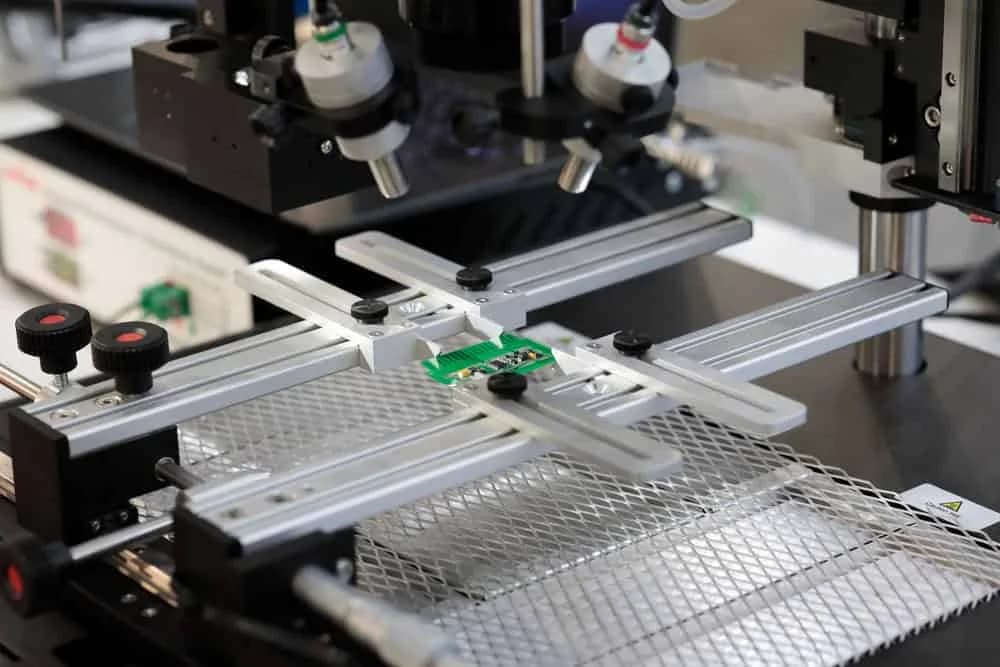
Inspection choices should match the automotive failure mode
AOI is a useful baseline for visible assembly defects, but it does not prove hidden BGA joints, connector seating, current loading, firmware behavior, coating coverage, or system-level performance. Automotive PCB programs often need a layered test plan that separates fabrication evidence, assembly evidence, and product behavior.
For mixed-technology vehicle electronics, pair this page with our ICT testing service, ICT vs functional test guide, and first article inspection guide.
Automotive PCB application fit
The page is written for buyers who need an electronics manufacturing partner to make the PCB release more auditable, repeatable, and production-ready.
Battery and charger electronics
BMS boards, charger control boards, contactor control electronics, and power supervision boards that need current-path review, insulation awareness.
Lighting and body-control modules
LED drivers, auxiliary lighting electronics, control boards, and retrofit modules where thermal behavior, connector orientation.
Sensors, telematics, and fleet systems
Vehicle-mounted electronics with vibration, temperature, connector, coating, programming.
Specialty and industrial vehicles
Low-volume vehicle platforms, delivery fleets, construction equipment, agricultural systems, robotics platforms.
FAQ for automotive PCB buyers
Use these answers to shape the RFQ before asking for price and lead time.
What does IATF 16949 mean for automotive PCB manufacturing?
IATF 16949 is an automotive quality management framework focused on defect prevention, risk control, traceability, and customer-specific requirements. For PCB buyers, the practical impact is stronger documentation around DFM review, process changes, inspection records, part approvals, and repeat lot control.
Is this page only for bare automotive PCB fabrication?
No. The page covers automotive PCB manufacturing as a controlled program workflow that can include bare board fabrication, SMT assembly, through-hole assembly, connector review, AOI, X-ray planning, ICT, functional test, and handoff into electronic assembly or box build work.
Can YourPCB support PPAP-ready automotive PCB records?
We can support the manufacturing records that commonly feed a buyer-owned PPAP or automotive approval package, including revision control, DFM findings, inspection results, test records, approved sourcing notes, and first-article feedback. The OEM or Tier supplier should define the exact submission level and customer-specific forms.
What automotive PCB files should I send for quote review?
Send Gerbers or ODB++, drill files, stackup notes, controlled impedance targets, BOM, XY placement data, assembly drawings, coating or cleanliness notes, test requirements, annual volume, revision history, and any automotive customer-specific requirements that must be reflected in the quote.
Which automotive electronics are a good fit?
This service is a fit for prototype, pilot, service-part, and controlled low-volume electronics used in ECUs, battery management, lighting, sensors, chargers, telematics, power distribution, industrial vehicles, specialty vehicles, and fleet retrofit systems.
Do automotive boards always require IPC Class 3?
Not always. Some automotive electronics use Class 2 workmanship with additional customer controls, while safety-critical or harsh-environment assemblies may require Class 3-style criteria. The acceptance class should be stated on the drawing before quoting because it changes inspection depth, rework limits, and documentation cost.
Related manufacturing resources
These existing pages cover the closest adjacent services and buyer controls.
PCB Assembly USA
U.S.-focused assembly support for teams that need faster quote clarification, DFM feedback, prototype builds, and bridge production planning.
Open pageLow Volume PCB Manufacturing
Controlled small-batch PCB fabrication and assembly for pilot lots, bridge builds, and engineering-driven production runs.
Open pageSMT PCB Assembly
Surface mount assembly support for fine-pitch components, BGA packages, AOI, X-ray planning, and reflow process control.
Open pageICT Testing Service
In-circuit test planning for PCB assemblies that need stronger fault isolation than visual inspection or a short powered check can provide.
Open pageFirst Article Inspection in PCB Assembly
Buyer guidance on turning first builds into useful production evidence instead of a simple visual approval step.
Open pageICT vs Functional Test in PCB Assembly
A practical guide to matching test coverage to real assembly and product failure modes.
Open pageSend the automotive PCB files before the process is locked
Share the Gerbers, BOM, drawings, test expectations, and automotive customer notes early. The useful quote is the one that identifies fabrication, assembly, inspection, and documentation risks before the board reaches first article release.

Backed by our Shenzhen SMT factory
26 placement machines · 11 SMT lines
4 nitrogen reflow ovens
100% 3D SPI & AOI inspection
Per-board MES traceability
01005 & PoP in stable production