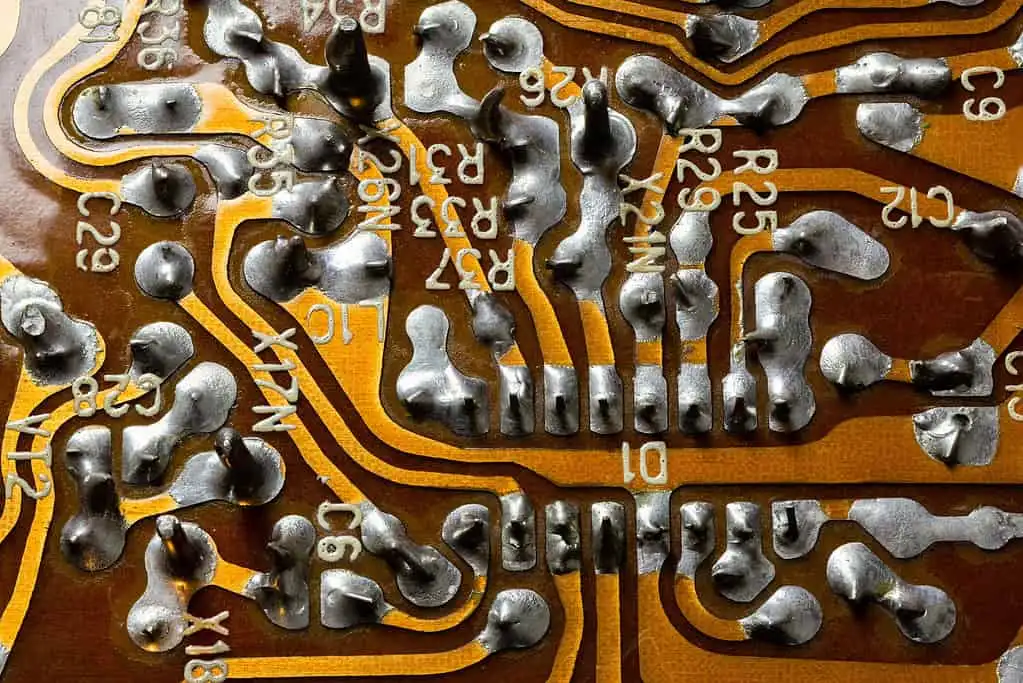
Flux is essential for quality solder joints. Learn what flux does and how to use it properly...
For more information on industry standards, see printed circuit board and IPC standards.
"When a cable sees more than 10,000 flex cycles, I stop treating jacket material as a purchasing detail; bend radius, strand class, and insulation thickness become the actual reliability drivers."
Hommer Zhao, Founder & CEO, WIRINGO
Flux is a chemical compound that enables successful soldering by cleaning metal surfaces and facilitating solder flow. Without flux, creating reliable solder joints would be nearly impossible.
The Science Behind Flux
Metal surfaces oxidize when exposed to air, forming a thin oxide layer. This oxide layer prevents solder from bonding to the base metal. Flux works through several mechanisms:
Chemical Cleaning: Flux contains acids or other reactive compounds that dissolve metal oxides when heated.
Oxide Prevention: While active, flux creates a protective barrier preventing new oxidation during the soldering process.
Surface Tension Reduction: Flux reduces the surface tension of molten solder, allowing it to spread and wet the joint surfaces properly.
Types of Flux
Rosin-Based Flux
Derived from pine tree sap, rosin flux is the most common type for electronics.
Variants:
- R (Rosin): Minimal activity, cleanest residue
- RMA (Rosin Mildly Activated): Moderate cleaning power, most common
- RA (Rosin Activated): Strongest cleaning, requires thorough post-solder cleaning
No-Clean Flux
Formulated to leave non-corrosive residue that doesn't require removal. Widely used in modern electronics manufacturing.
Water-Soluble Flux
Highly active flux that dissolves easily in water for cleaning. Must be removed as residue is corrosive.
Organic Acid Flux
Stronger than rosin, used for difficult-to-solder materials. Requires careful cleaning.
"A crimp that passes pull-force once is not enough. For production harnesses, the process has to hold conductor brush length, insulation support, and crimp height within the work instruction every shift."
Hommer Zhao, Founder & CEO, WIRINGO
Flux Forms
Liquid Flux: Applied with brush, dropper, or spray. Good for pre-treating surfaces.
Flux Paste: Thick consistency that stays in place. Ideal for SMD work and rework.
Flux Pen: Convenient for touch-up and precision application.
Cored Solder: Flux contained inside the solder wire—releases automatically during soldering. Most convenient for hand soldering.
Flux Gel: Medium viscosity between liquid and paste.
How to Use Flux
- Prepare surfaces: Clean parts of heavy contamination before applying flux
- Apply flux: Use appropriate method based on flux form
- Heat promptly: Flux is most effective when fresh; don't let it dry before soldering
- Solder: Apply heat and solder while flux is active
- Clean if required: Remove residue based on flux type and application requirements
When Flux is Essential
- Soldering oxidized or tarnished surfaces
- Joining dissimilar metals
- SMD and fine-pitch component work
- Desoldering and rework operations
- Any situation where solder doesn't flow properly
Common Mistakes
Too little flux: Solder won't flow properly, joints will be dull and weak.
Too much flux: Excessive residue, potential for flux spattering.
Wrong type: Using plumbing flux on electronics will cause corrosion.
Old flux: Flux loses effectiveness over time, especially once exposed to air.
No cleaning when required: Water-soluble flux left on boards will cause corrosion.
Conclusion
Flux is essential for creating reliable solder joints. It cleans surfaces, prevents oxidation, and helps solder flow. For most electronics work, rosin-based or no-clean flux is appropriate. Always match your flux type to your application and cleaning capabilities.
"On portable cord and harness work, the standard matters as much as the drawing. UL 62, IPC/WHMA-A-620, and the connector maker's crimp spec each control a different failure mode."
Hommer Zhao, Founder & CEO, WIRINGO
If you want to turn this topic into a production decision, review our cable assembly guide, check the supporting numbers on the FFC cable reference, and use the wire harness manufacturing service if you need a second review before release.
FAQ
What bend radius should I use for flexible cable design?
For dynamic flex, many teams start around 10x to 20x the overall cable thickness, while static bend-to-install applications can tolerate tighter radii if the supplier approves the construction.
Which standard applies to wire harness workmanship?
IPC/WHMA-A-620 is the core acceptance document, and many customers also add UL, SAE, or connector-specific crimp specifications depending on the market.
How do I know whether a cable needs shielding?
If the line carries fast edges, switching currents, or operates near motors and inverters, shielding should be evaluated. A 360-degree termination usually performs better than a pigtail drain at higher frequencies.
What pull-force numbers matter on a crimped wire?
The exact value depends on conductor size and terminal series, but the production rule is simple: use the terminal maker's crimp-height window and verify pull-force with a calibrated tester.
When is FPC better than FFC?
FPC is usually the safer choice when the design needs controlled impedance, tighter than about 0.5 mm pitch features, dynamic flex life, or integrated components on the cable itself.
How much temperature margin should portable cord have?
For real industrial use, choose a cord whose jacket and insulation ratings exceed the worst-case environment, whether that means 60°C, 90°C, or oil- and water-resistant service under UL 62 or NEC Article 400.


Need Help with Your PCB Design?
Check out our free calculators and tools for electronics engineers.
Browse PCB Tools"In over 20 years of manufacturing experience, we have learned that quality control at the component level determines 80% of field reliability. Every specification decision you make today affects warranty costs three years from now."
— Hommer Zhao, Founder & CEO, WIRINGO