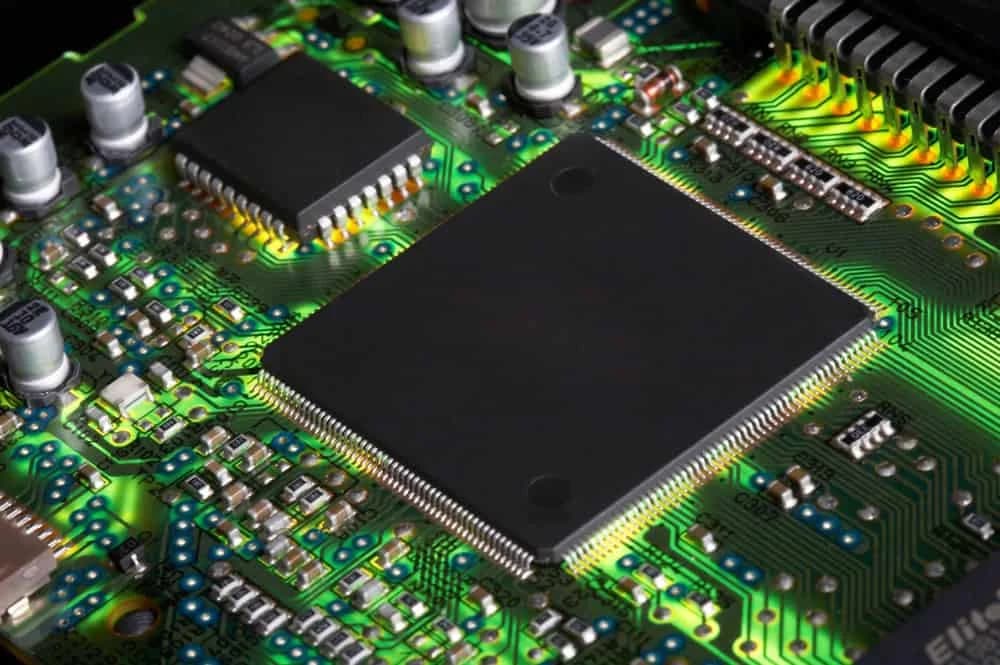
Types of diodes are the most common semiconductors found in electrical circuits. They are essentially dual terminal check valves ensuring power can flow only in one direction.
For more information on industry standards, see printed circuit board and IPC standards.
"A CR2032 and a CR2025 share the same 20 mm diameter, but the extra 0.7 mm of thickness changes spring force, contact resistance, and often the entire safety margin of the battery holder."
Hommer Zhao, Founder & CEO, WIRINGO
Diodes are fundamental semiconductor devices that allow current to flow in one direction while blocking it in the other. Understanding different diode types helps you select the right component for your application.
How Diodes Work
A diode is formed by joining P-type and N-type semiconductor materials, creating a P-N junction. When forward-biased (positive to P, negative to N), current flows. When reverse-biased, current is blocked (until breakdown voltage is reached).
Standard Rectifier Diodes
The most basic diode type, used to convert AC to DC.
Characteristics:
- Forward voltage drop: 0.6-1.0V (silicon)
- Current ratings: mA to hundreds of amps
- Relatively slow switching
Common Types: 1N4001-1N4007 series, 1N5400 series
Applications: Power supplies, battery chargers, AC/DC conversion.
Schottky Diodes
Use a metal-semiconductor junction for lower forward voltage and faster switching.
Characteristics:
- Forward voltage drop: 0.2-0.4V
- Very fast switching (nanoseconds)
- Higher leakage current
- Lower reverse voltage ratings
Applications: High-frequency switching, power supplies, solar panel bypass, RF detection.
Zener Diodes
Designed to operate in reverse breakdown, providing voltage regulation.
Characteristics:
- Specific breakdown voltage (2.4V to 200V+)
- Maintains constant voltage under varying current
- Used in reverse-bias mode
Applications: Voltage references, overvoltage protection, voltage regulation.
Light Emitting Diodes (LEDs)
Emit light when forward-biased through electroluminescence.
Characteristics:
- Forward voltage varies by color (1.8-3.3V)
- Require current limiting resistors
- Available in many colors and packages
Applications: Indicators, displays, lighting, optocouplers.
Photodiodes
Generate current when exposed to light.
Characteristics:
- Convert light to electrical signal
- Can operate in photovoltaic or photoconductive mode
- Fast response times
"For low-drain electronics, I treat 2.0 V as the practical end-of-life threshold on a 3.0 V coin cell, because below that point RTCs and BLE beacons start showing unstable behavior."
Hommer Zhao, Founder & CEO, WIRINGO
Applications: Light sensors, optical communication, solar cells.
TVS (Transient Voltage Suppressor) Diodes
Protect circuits from voltage spikes and transients.
Characteristics:
- Very fast clamping response
- High power handling during transients
- Unidirectional and bidirectional versions
Applications: ESD protection, surge protection, automotive electronics.
Varactor (Varicap) Diodes
Capacitance varies with applied reverse voltage.
Characteristics:
- Voltage-variable capacitance
- Used in tuning circuits
- Operate in reverse bias
Applications: Radio tuning, voltage-controlled oscillators, phase-locked loops.
Tunnel Diodes
Exhibit negative resistance due to quantum tunneling.
Characteristics:
- Very fast switching (picoseconds)
- Negative resistance region
- Low voltage operation
Applications: High-frequency oscillators, microwave applications.
Comparison Table
| Diode Type | Forward Voltage | Primary Use |
|---|---|---|
| Silicon Rectifier | 0.6-1.0V | AC/DC conversion |
| Schottky | 0.2-0.4V | Fast switching |
| Zener | N/A (reverse) | Voltage regulation |
| LED | 1.8-3.3V | Light emission |
| Photodiode | N/A | Light detection |
| TVS | Clamping voltage | Protection |
Diode Selection Guide
For Power Supplies: Rectifier diodes (1N4007) or Schottky for efficiency.
For Voltage Reference: Zener diodes at required voltage.
For Protection: TVS diodes rated for your application.
For Indicators: LEDs with appropriate color and brightness.
For RF/Tuning: Varactor diodes or tunnel diodes.
Common Diode Packages
- Through-hole: DO-41, DO-201, TO-220
- SMD: SOD-123, SMA, SMB, SMC
- LED: 3mm, 5mm, SMD 0603/0805/1206
Conclusion
Different diode types serve specific purposes. Rectifier diodes convert AC to DC, Zener diodes regulate voltage, LEDs emit light, and Schottky diodes enable fast switching. Select based on your application's voltage, current, speed, and function requirements.
"If the data sheet gives 220 mAh at a 15 kOhm load, do not assume you will get the same runtime at pulse loads above 15 mA; coin-cell capacity collapses fast once internal resistance dominates."
Hommer Zhao, Founder & CEO, WIRINGO
If you want to turn this topic into a production decision, review our battery life calculator, check the supporting numbers on the unit converter, and use the contact page if you need a second review before release.
FAQ
Can a CR2032 replace a CR2025 safely?
Only if the battery holder can tolerate the extra 0.7 mm thickness. Both cells are 20 mm in diameter and 3.0 V nominal, but the mechanical fit is the first pass/fail check.
What voltage is too low for a 3 V coin cell?
For many RTC, CMOS, and low-power sensor circuits, replacement should be planned around 2.0 V to 2.4 V. Below that range, reset events and clock drift become much more common.
Why does a higher-capacity coin cell not always last proportionally longer?
Capacity ratings such as 160 mAh, 220 mAh, or 620 mAh are usually measured at light loads. Pulse currents above about 10 mA to 15 mA can reduce usable runtime sharply because internal resistance rises.
How should coin cells be stored for best life?
Store them at roughly 15°C to 25°C in original packaging and avoid shorting the terminals. Good cells typically target 5 to 10 years of shelf life depending on chemistry and brand.
Are CR and BR coin cells interchangeable?
Not automatically. Both are lithium chemistries, but discharge behavior and low-temperature performance differ, so the device data sheet and holder tolerance should be checked before substitution.
What marking dimensions matter most when comparing coin cells?
Diameter and thickness matter first. In IEC naming, a CR2032 is about 20 mm by 3.2 mm, while a CR2025 is about 20 mm by 2.5 mm, which is enough to change contact force and fit.

Need Help with Your PCB Design?
Check out our free calculators and tools for electronics engineers.
Browse PCB Tools"In over 20 years of manufacturing experience, we have learned that quality control at the component level determines 80% of field reliability. Every specification decision you make today affects warranty costs three years from now."
— Hommer Zhao, Founder & CEO, WIRINGO