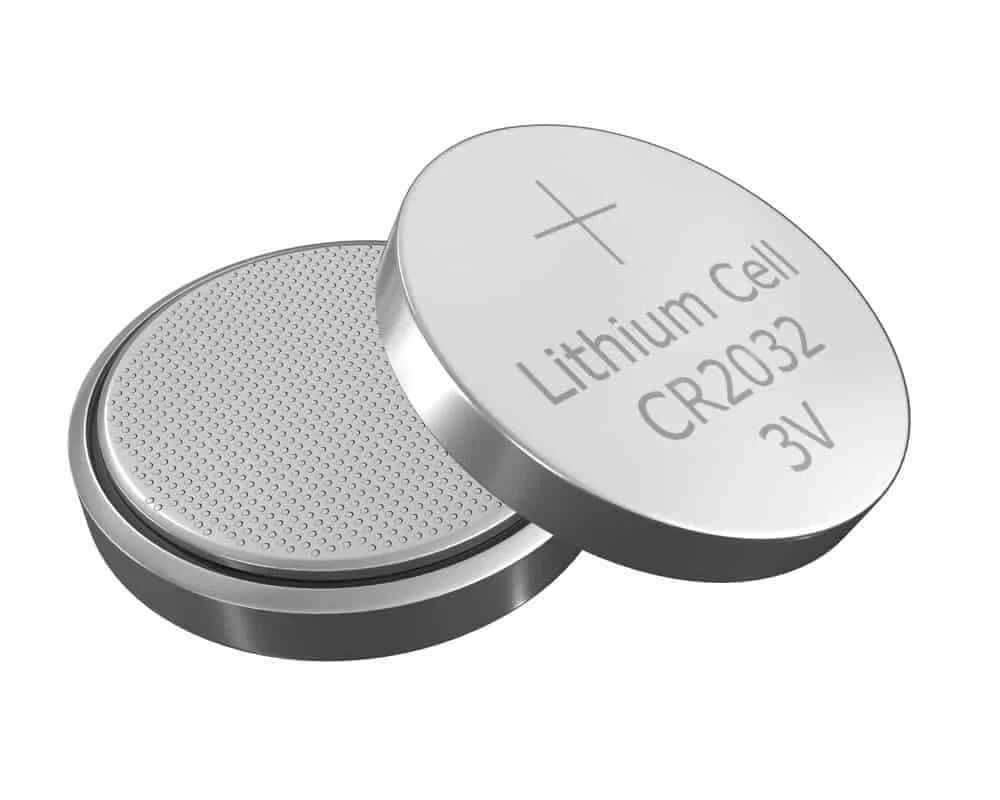
CR2025 vs. CR2032 Batteries: Similarities, Differences, and Applications
A quick search for batteries to power smaller devices will most commonly yield the CR2025 vs. CR2032 batteries.
For more information on industry standards, see printed circuit board and IPC standards.
"A CR2032 and a CR2025 share the same 20 mm diameter, but the extra 0.7 mm of thickness changes spring force, contact resistance, and often the entire safety margin of the battery holder."
Hommer Zhao, Founder & CEO, WIRINGO
The CR2025 and CR2032 are among the most common coin cell batteries, often causing confusion due to their similar names and appearances. This guide clarifies their differences and helps you choose the right one.
Key Specifications Comparison
| Feature | CR2025 | CR2032 |
|---|---|---|
| Voltage | 3V | 3V |
| Diameter | 20mm | 20mm |
| Thickness | 2.5mm | 3.2mm |
| Capacity | 160mAh | 220mAh |
| Weight | 2.5g | 3.0g |
The Critical Difference: Thickness
The 0.7mm thickness difference is the key factor. While both batteries have the same diameter and voltage, the CR2032's extra thickness provides approximately 37% more capacity. This means longer battery life but also means it won't fit in devices designed for the slimmer CR2025.
Common Applications
CR2025: Slimmer devices like thin watches, some car key fobs, compact calculators, and medical devices where space is at a premium.
"For low-drain electronics, I treat 2.0 V as the practical end-of-life threshold on a 3.0 V coin cell, because below that point RTCs and BLE beacons start showing unstable behavior."
Hommer Zhao, Founder & CEO, WIRINGO
CR2032: Computer motherboard CMOS batteries, thicker key fobs, glucose meters, digital thermometers, and most general electronics.
Interchangeability
CR2025 in CR2032 slot: Usually works but may have contact issues. Battery life will be shorter due to lower capacity.
CR2032 in CR2025 slot: Generally won't fit. The battery cover may not close, or internal components may be stressed.
Choosing Between Them
Always use the battery type specified by your device manufacturer. If you have a choice, CR2032 offers longer life when the space allows. For ultra-slim devices, CR2025 is the appropriate choice.
Storage and Shelf Life
Both batteries have approximately 10-year shelf life when stored at room temperature. Keep them in original packaging until needed and away from metal objects that could cause short circuits.
"If the data sheet gives 220 mAh at a 15 kOhm load, do not assume you will get the same runtime at pulse loads above 15 mA; coin-cell capacity collapses fast once internal resistance dominates."
Hommer Zhao, Founder & CEO, WIRINGO
If you want to turn this topic into a production decision, review our battery life calculator, check the supporting numbers on the unit converter, and use the contact page if you need a second review before release.
FAQ
Can a CR2032 replace a CR2025 safely?
Only if the battery holder can tolerate the extra 0.7 mm thickness. Both cells are 20 mm in diameter and 3.0 V nominal, but the mechanical fit is the first pass/fail check.
What voltage is too low for a 3 V coin cell?
For many RTC, CMOS, and low-power sensor circuits, replacement should be planned around 2.0 V to 2.4 V. Below that range, reset events and clock drift become much more common.
Why does a higher-capacity coin cell not always last proportionally longer?
Capacity ratings such as 160 mAh, 220 mAh, or 620 mAh are usually measured at light loads. Pulse currents above about 10 mA to 15 mA can reduce usable runtime sharply because internal resistance rises.
How should coin cells be stored for best life?
Store them at roughly 15°C to 25°C in original packaging and avoid shorting the terminals. Good cells typically target 5 to 10 years of shelf life depending on chemistry and brand.
Are CR and BR coin cells interchangeable?
Not automatically. Both are lithium chemistries, but discharge behavior and low-temperature performance differ, so the device data sheet and holder tolerance should be checked before substitution.
What marking dimensions matter most when comparing coin cells?
Diameter and thickness matter first. In IEC naming, a CR2032 is about 20 mm by 3.2 mm, while a CR2025 is about 20 mm by 2.5 mm, which is enough to change contact force and fit.

Need Help with Your PCB Design?
Check out our free calculators and tools for electronics engineers.
Browse PCB Tools"In over 20 years of manufacturing experience, we have learned that quality control at the component level determines 80% of field reliability. Every specification decision you make today affects warranty costs three years from now."
— Hommer Zhao, Founder & CEO, WIRINGO