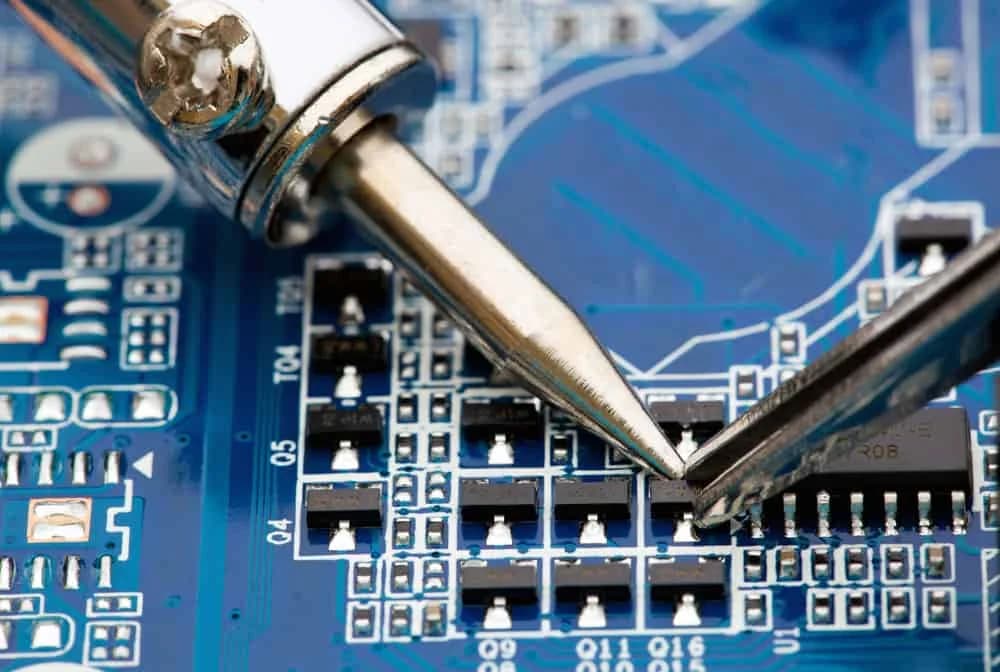
Proper cleaning extends PCB life and ensures reliable operation. Learn the best methods for cleaning circuit boards...
For more information on industry standards, see printed circuit board and IPC standards.
"In PCB assembly, a 10°C mistake in profile or a 20% paste-volume error is enough to turn a stable process into voiding, opens, or head-in-pillow defects."
Hommer Zhao, Founder & CEO, WIRINGO
Clean circuit boards are essential for reliability and proper function. Contamination can cause electrical failures, corrosion, and coating adhesion problems. This guide covers proper PCB cleaning techniques.
Why Clean PCBs?
Contaminants affect PCB performance:
- Flux residue: Can cause dendritic growth and short circuits
- Dust and debris: May cause shorts or thermal issues
- Fingerprint oils: Attract moisture and contaminants
- Corrosion: Reduces conductivity and reliability
Cleaning Materials
Isopropyl Alcohol (IPA)
The most common and effective PCB cleaner.
Recommended concentration: 90% or higher (99% preferred)
Why high concentration? Lower concentrations contain more water, which takes longer to evaporate and may leave residue.
How to use: Apply with soft brush, cotton swab, or lint-free cloth. Scrub gently and allow to evaporate completely.
Specialized Flux Removers
Commercial flux removers are formulated to dissolve flux residue quickly.
Best for: Heavy flux contamination, rosin and no-clean flux removal.
Popular products: MG Chemicals, Techspray, Chemtronics.
Distilled Water
Safe for washing water-soluble flux residue.
Important: Use only distilled water (not tap water). Ensure complete drying before power-up.
Compressed Air
For removing dust and loose particles.
Tips: Use short bursts, keep can upright, avoid propellant liquid contact.
Cleaning Methods
Manual Cleaning
Suitable for light contamination and small quantities.
"I trust assembly data when it ties back to a standard or a measurement: IPC-A-610 acceptance, stencil thickness in mils, and X-ray void percentage tell you more than adjectives ever will."
Hommer Zhao, Founder & CEO, WIRINGO
Process:
- Remove power source and batteries
- Apply cleaning solution to brush or cloth
- Gently scrub contaminated areas
- Wipe with clean lint-free cloth
- Allow to dry completely
- Inspect for remaining contamination
- Repeat if necessary
Tools: Soft-bristle brush, cotton swabs, lint-free wipes.
Ultrasonic Cleaning
Best for thorough cleaning, especially under components.
Process:
- Prepare cleaning solution in ultrasonic tank
- Place PCB in tank (avoid impact with other objects)
- Run ultrasonic cycle (5-15 minutes)
- Rinse with clean solution
- Dry thoroughly
Cautions: May damage some components (certain crystal oscillators, relays, some electrolytic capacitors). Check component datasheets.
Dishwasher Cleaning (Controversial)
Some technicians use dishwashers for heavily contaminated boards.
Cautions:
- Use no detergent
- Avoid heated dry cycle
- Remove batteries and sensitive components
- Ensure complete drying (24-48 hours or bake)
- Not suitable for all boards
Drying Methods
Complete drying is critical before power-up.
Air drying: Allow 24 hours minimum in dry environment.
Forced air: Use heat gun on low setting or fan.
Oven baking: 60-80°C for 2-4 hours (not suitable for all components).
What Not to Do
- Don't use tap water: Contains minerals that leave residue
- Don't use acetone on plastics: Damages many plastics and components
- Don't power on wet boards: Risk of short circuit and damage
- Don't use abrasive materials: Scratches traces and coatings
- Don't use excessive pressure: Can damage components
When to Clean
- After soldering (flux removal)
- Before conformal coating
- After contamination exposure
- During troubleshooting
- For visual inspection
Special Cases
Corrosion: Use white vinegar (mild acid) followed by IPA neutralization and thorough rinse.
Heavy contamination: May require multiple cleaning passes or professional cleaning service.
Conformal coated boards: Require specialized removers or may not be cleanable.
Conclusion
For most PCB cleaning, 99% isopropyl alcohol and a soft brush provide excellent results. Always ensure complete drying before applying power. For heavy contamination or production quantities, consider ultrasonic cleaning.
"If a joint, connector, or package fails after reflow, I want three numbers immediately: peak temperature, time above liquidus, and the actual land-pattern geometry that was built."
Hommer Zhao, Founder & CEO, WIRINGO
If you want to turn this topic into a production decision, review our SMT PCB assembly service, check the supporting numbers on the through-hole assembly service, and use the PCB DFM design rules reference if you need a second review before release.
FAQ
What is a safe starting reflow profile for lead-free SMT?
Most SAC305 assemblies target a peak around 240°C to 250°C with 45 to 90 seconds above the 217°C liquidus, but the component data sheets always take priority.
How much solder-paste volume variation is acceptable?
A process that drifts by more than about 20% from target paste volume is already at risk for opens, bridging, or voiding on fine-pitch parts.
Which standards define acceptable solder joints?
IPC-A-610 is the main visual acceptance standard, while J-STD-001 defines process requirements for soldered electrical and electronic assemblies.
When should I use X-ray inspection?
Use X-ray whenever the package hides the joints, such as BGA, QFN center pads, or bottom-terminated components where voiding and opens cannot be judged visually.
Why do assemblies fail after thermal cycling?
The usual causes are CTE mismatch, insufficient wetting, voiding, and profile errors. Even a small land-pattern or alloy mismatch can show up after a few hundred cycles.
How do I reduce first-pass assembly defects?
Lock the stencil design, verify the reflow profile with thermocouples, and confirm polarity and footprint data before the first run. Those three checks prevent a large share of avoidable defects.

Need Help with Your PCB Design?
Check out our free calculators and tools for electronics engineers.
Browse PCB Tools"In over 20 years of manufacturing experience, we have learned that quality control at the component level determines 80% of field reliability. Every specification decision you make today affects warranty costs three years from now."
— Hommer Zhao, Founder & CEO, WIRINGO