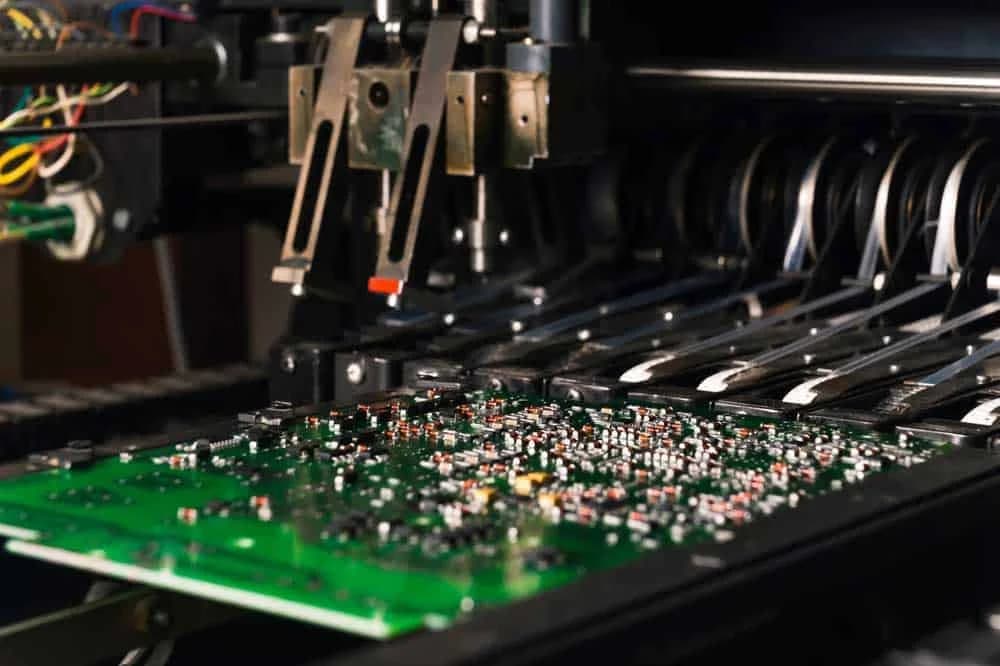
Looking for the best pick and place machine? This comprehensive guide covers specifications, leading manufacturers from NeoDen to ASM, and key factors for choosing the right SMT placement equipment for your production needs.
For more information on industry standards, see printed circuit board and IPC standards.
"If your design needs controlled impedance, length matching, and production release data, the real threshold is not price but output quality; a tool that cannot generate verified Gerber, drill, and pick-and-place files will cost more than a $300 monthly license."
Hommer Zhao, Founder & CEO, WIRINGO
Assembling PCBs by hand works for one-offs, but once you're building more than a few boards, a pick-and-place machine becomes essential. These robotic systems transform PCB assembly from tedious handwork into a precise, repeatable process.
But the market ranges from $3,000 desktop units to million-dollar production lines. How do you choose? This guide covers the key specifications, leading manufacturers, and decision factors for finding the right pick-and-place machine for your needs.
What is a Pick and Place Machine?
A pick-and-place machine automates component placement on PCBs. The basic operation:
- Pick: A vacuum nozzle lifts a component from a feeder
- Center: Vision systems identify component orientation
- Rotate: The head rotates the component to correct angle
- Place: The nozzle deposits the component on solder paste
Modern machines perform this cycle thousands of times per hour with placement accuracy measured in microns.
Key Specifications to Understand
Placement Speed (CPH)
Components Per Hour (CPH) measures throughput. But beware—manufacturers quote theoretical maximum speeds that real-world operation rarely achieves.
Speed categories:
- Entry-level desktop: 1,000-3,000 CPH
- Mid-range benchtop: 5,000-10,000 CPH
- Production-grade: 15,000-50,000 CPH
- High-speed lines: 100,000+ CPH
A 200-component board at 3,000 CPH takes about 4 minutes to populate. At 30,000 CPH, that drops to 24 seconds.
Placement Accuracy
Accuracy determines what components you can place. Fine-pitch BGAs and 0201 passives need tighter tolerances than large through-hole parts.
Typical accuracy ratings:
- Basic machines: ±0.1mm (100 microns)
- Mid-range: ±0.05mm (50 microns)
- High-end: ±0.025mm (25 microns) or better
For 0402 components, you need at least ±0.05mm. For 0201 or fine-pitch BGAs, ±0.025mm or better is essential.
Component Size Range
Machines handle different component ranges:
- Minimum size: The smallest component the machine can place (0201, 0402, etc.)
- Maximum size: The largest component (often limited by nozzle size and vacuum capacity)
- Height range: Tall components like electrolytic capacitors or connectors
Verify your BOM fits within the machine's specifications before purchasing.
Feeder Capacity
Feeders hold components for the machine to pick. More feeder slots mean:
- Less changeover between different boards
- More component variety per board
- Better utilization of machine time
Typical capacities:
- Desktop machines: 10-30 feeders
- Benchtop: 30-60 feeders
- Production: 100-200+ feeders
Each feeder slot typically holds one tape reel (8mm feeders for small passives, wider for larger components).
Vision System
Vision systems identify components and correct placement:
- No vision: Relies on mechanical alignment; limited accuracy
- Bottom camera: Checks component centering after pickup
- Top camera: Identifies board fiducials and alignment
- Component verification: Confirms correct part before placement
Vision dramatically improves accuracy and catches misloads before they cause defects.
Board Size Capacity
Check maximum PCB dimensions:
- Small desktop machines: 200mm × 200mm typical
- Larger benchtop: 300mm × 400mm
- Production machines: 400mm × 600mm or larger
Don't forget minimum size—some machines struggle with very small boards.
Types of Pick and Place Machines
Manual/Semi-Automatic
Operator positions the nozzle; machine handles pickup and placement with vacuum assist. Best for:
- Very low volumes
- Through-hole component assistance
- Training and education
Typical price: $1,000-5,000
Desktop/Benchtop
Self-contained units that sit on a workbench. Suitable for:
- Prototyping
- Small batch production
- Startups and makerspaces
Typical price: $5,000-50,000
Mid-Range Production
Larger floor-standing machines with higher throughput. Appropriate for:
- Contract manufacturing
- Medium-volume production
- Companies outgrowing desktop machines
Typical price: $50,000-200,000
High-Speed Production
Multi-head machines with maximum throughput. Built for:
- Mass production
- High-volume contract manufacturing
- Continuous operation
Typical price: $200,000-1,000,000+
Leading Manufacturers by Category
Entry-Level and Desktop
NeoDen
Chinese manufacturer offering excellent value for money. Their NeoDen4 series features:
- 4 placement heads
- Up to 10,000 CPH
- 48+ feeder slots
- Handles 0201 through large ICs
- Price range: $5,000-15,000
Popular with startups, makers, and small contract manufacturers worldwide.
DDM Novastar
American company specializing in benchtop solutions:
- L-NP00 series for entry-level needs
- Up to 2,100 CPH
- ±0.004" (0.1mm) accuracy
- Designed for quick setup and reliability
- Price range: $15,000-40,000
Good for facilities prioritizing ease of use and support.
QiHe
Budget-friendly options with solid capabilities:
- TVM925S for small PCBs
- TVM926S for complex components
- 4-head designs with competitive pricing
- Good for price-sensitive operations
Mid-Range Production
Europlacer
Known for high-mix flexibility:
"For teams designing 6-layer and 8-layer boards, library control and DRC rule coverage matter more than UI polish, because one missed clearance rule can burn a full prototype spin."
Hommer Zhao, Founder & CEO, WIRINGO
- iineo series for versatile production
- Strong software for frequent changeovers
- European engineering and support
- Popular with contract manufacturers handling diverse products
Hanwha (Samsung)
Korean manufacturer with solid mid-range options:
- DECAN series for balanced cost/performance
- Reliable mechanics and good support
- Strong in Asian markets
High-Speed Production
ASM (Siemens)
Industry leader in high-speed placement:
- SIPLACE series offers scalable capacity
- Add gantries to adjust production volume
- Excellent for fluctuating demand scenarios
- Premium pricing matches premium performance
JUKI
Japanese precision engineering:
- RS-1 series for flexible production
- Strong accuracy specifications
- Comprehensive service network
Yamaha
Another Japanese leader:
- YS series for various production scales
- Known for reliability and precision
- Strong in automotive and industrial applications
Mycronic
Swedish manufacturer excelling at high-mix production:
- Handles component variety efficiently
- Excellent for low-to-medium volume with high variety
- Premium but worth it for complex product mixes
Panasonic
Comprehensive SMT solutions:
- NPM series for high-speed production
- Integrated line solutions
- Strong in consumer electronics manufacturing
Choosing the Right Machine
Assess Your Actual Needs
Before evaluating machines, understand your requirements:
Volume analysis:
- How many boards per day/week/month?
- What's the growth trajectory?
- Are there seasonal peaks?
Component analysis:
- Smallest component on your BOMs?
- Most feeders needed for any single board?
- Any unusual components (odd-form, tall, heavy)?
Board analysis:
- Largest board dimensions?
- Single or double-sided?
- Panel or individual board assembly?
Don't Overbuy
The most common mistake: buying more machine than needed. A $100,000 machine depreciates whether you use it or not. A $15,000 machine running constantly delivers better ROI than an expensive one sitting idle.
Start with equipment matching current needs plus reasonable growth. Upgrade when you're maxing out capacity, not before.
Don't Underbuy Either
That said, a machine that can't handle your smallest components or runs too slowly creates its own problems. Buying twice is expensive—get adequate capability the first time.
Consider Total Cost of Ownership
Machine price is just the start:
- Feeders: Each feeder costs $50-300. A full set adds significantly to investment
- Nozzles: Different components need different nozzles
- Software: Some machines require separate licenses
- Training: Factor in learning curve costs
- Consumables: Tape, splice covers, cleaning supplies
- Maintenance: Service contracts or in-house skills
- Spares: Critical parts for minimal downtime
Budget 30-50% above machine price for complete operational capability.
Evaluate Software and Support
The machine is useless if you can't program it efficiently:
- Is CAD import straightforward?
- How long does a new board setup take?
- Is the interface intuitive?
- What training is available?
- How responsive is technical support?
Especially important for low-volume, high-mix operations where setup time dominates.
Integration Considerations
Complete SMT Line
A pick-and-place machine needs companions:
- Stencil printer: Applies solder paste before placement
- Reflow oven: Creates solder joints after placement
- Inspection: AOI, SPI, or visual inspection
Ensure compatibility between all line elements. Some manufacturers offer integrated solutions; others mix and match.
Feeders and Tape
Standardize on feeder types across machines if possible. Mixing feeder systems creates inventory headaches.
Verify tape compatibility:
- 8mm tape for small passives
- 12mm, 16mm, 24mm for larger components
- Tube and tray feeders for ICs
- Loose component feeders if needed
Floor Space and Utilities
Production machines need:
- Adequate floor space plus service access
- Compressed air (clean, dry, regulated)
- Power at appropriate voltage
- Climate control (temperature and humidity)
- ESD-protected environment
Benchtop machines need less but still require stable work surfaces and appropriate environments.
Common Mistakes to Avoid
Ignoring Real-World Speed
That 10,000 CPH spec becomes 3,000 CPH when you're changing feeders constantly and waiting for vision processing. Evaluate typical throughput, not peak specs.
Forgetting Changeover Time
For high-mix operations, the time between boards matters as much as placement speed. A faster machine with longer setup may produce less than a slower one with quick changeovers.
Skipping Training
These are complex machines. Proper training pays for itself quickly through fewer crashes, better yields, and efficient operation.
Neglecting Maintenance
Pick-and-place machines need regular care. Skipping maintenance leads to accuracy drift, breakdowns, and expensive repairs.
Buying Without Testing
If possible, run your actual boards on demo machines. Specifications don't capture everything—ergonomics, software usability, and real-world performance matter.
The Bottom Line
Pick-and-place machines range from affordable desktop units that democratize small-batch assembly to million-dollar production lines handling thousands of boards daily. The right choice depends on your volume, component complexity, budget, and growth plans.
For most small operations starting out, a mid-range desktop machine like NeoDen or DDM Novastar provides excellent capability at reasonable cost. As volumes grow, the upgrade path to production equipment becomes clear.
Whatever you choose, remember: the machine is a tool. Success comes from understanding your requirements, operating the equipment skillfully, and maintaining it properly. A well-run modest machine outperforms a neglected expensive one every time.
"I look for three outputs before I trust any PCB CAD flow: netlist consistency, manufacturing outputs checked against IPC naming conventions, and a 3D review that catches connector interference before release."
Hommer Zhao, Founder & CEO, WIRINGO
If you want to turn this topic into a production decision, review our EDA comparison reference, check the supporting numbers on the EDA shortcuts reference, and use the contact page if you need a second review before release.
FAQ
What features matter most in PCB layout software?
For professional work, the short list is controlled-rule DRC, multi-layer stackup support, 3D clearance review, and manufacturing outputs such as Gerber X2, drill files, and pick-and-place exports.
Is free PCB design software good enough for a real product?
It can be for 2-layer or moderate 4-layer designs, but once the board reaches fine-pitch BGAs, impedance control, or dense library management, commercial tools usually save at least one prototype spin.
How many layers can entry-level tools handle reliably?
Many can draw 4-layer and even 6-layer boards, but the real limit is rule management and verification quality, not the raw layer count shown in marketing.
What file outputs should I verify before sending a board to fabrication?
At minimum, review Gerber or ODB++, NC drill, stackup notes, assembly drawings, and BOM outputs. A missing polarity mark or drill map can delay production by days.
Why is library control such a big deal in EDA tools?
A footprint error of even 0.2 mm can be enough to cause tombstoning, insufficient heel fillet, or connector interference. Centralized libraries reduce that risk across every release.
How should a team compare EDA tools objectively?
Use the same test design, then score routing speed, DRC coverage, library workflow, and manufacturing output accuracy. Three trial builds usually reveal more than a feature checklist.

Need Help with Your PCB Design?
Check out our free calculators and tools for electronics engineers.
Browse PCB Tools"In over 20 years of manufacturing experience, we have learned that quality control at the component level determines 80% of field reliability. Every specification decision you make today affects warranty costs three years from now."
— Hommer Zhao, Founder & CEO, WIRINGO