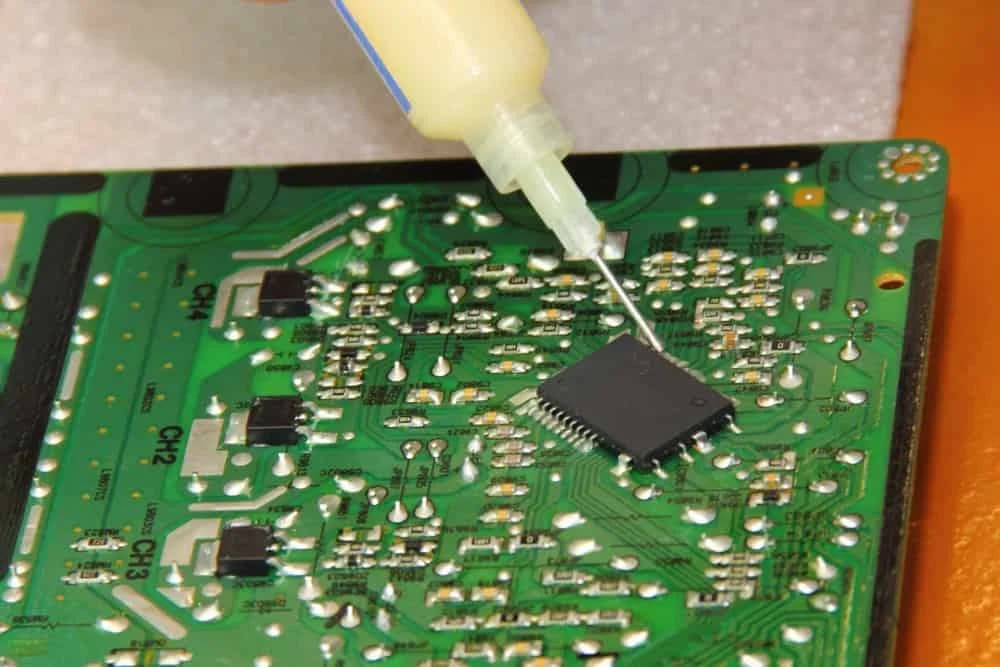
The right flux makes soldering easier and creates stronger joints. This guide covers the best flux options for different applications...
For more information on industry standards, see printed circuit board and IPC standards.
"When a cable sees more than 10,000 flex cycles, I stop treating jacket material as a purchasing detail; bend radius, strand class, and insulation thickness become the actual reliability drivers."
Hommer Zhao, Founder & CEO, WIRINGO
Flux is essential for successful soldering. It removes oxides from metal surfaces, prevents new oxidation during heating, and helps solder flow smoothly. Choosing the right flux improves joint quality and reliability.
How Flux Works
During soldering, heat causes metal surfaces to oxidize rapidly. Oxidized surfaces repel solder, preventing proper bonding. Flux chemically cleans surfaces and creates a protective barrier, allowing solder to wet and flow correctly.
Types of Flux
Rosin Flux (R, RMA, RA)
Derived from pine tree resin, rosin flux is the traditional choice for electronics.
R (Rosin): Mildest activity, minimal residue. Best for clean surfaces and simple joints.
RMA (Rosin Mildly Activated): Moderate activity, suitable for most electronics work. The most common type for hand soldering.
RA (Rosin Activated): Strongest rosin type, for difficult-to-solder surfaces. Requires thorough cleaning.
Pros: Safe for electronics, established track record, available everywhere.
Cons: Leaves sticky residue, may require cleaning.
No-Clean Flux
Formulated to leave minimal, non-corrosive residue that doesn't require removal.
Pros: Saves cleaning time and cost, residue won't cause problems, widely used in manufacturing.
Cons: Residue may affect cosmetics or coating adhesion.
Best for: Production environments, repairs where cleaning is impractical.
Water-Soluble Flux
Highly active flux that cleans easily with water.
Pros: Very effective on difficult surfaces, easy cleanup with just water.
Cons: Must be cleaned—residue is corrosive. Not suitable for situations where cleaning is impossible.
Best for: Industrial applications with proper wash facilities.
Top Flux Brands
"A crimp that passes pull-force once is not enough. For production harnesses, the process has to hold conductor brush length, insulation support, and crimp height within the work instruction every shift."
Hommer Zhao, Founder & CEO, WIRINGO
Kester
Industry standard for professional soldering. Their 951 no-clean flux and 44 rosin core solder are widely respected.
Recommended: Kester 951 liquid flux, Kester 186 flux pen.
MG Chemicals
Excellent value with professional quality. Good range of flux types.
Recommended: 835 rosin flux paste, 8341 no-clean flux.
Chip Quik
Specialty products for difficult soldering tasks, especially SMD rework.
Recommended: SMD291 flux, no-clean flux paste.
Amtech
Popular among hobbyists and repair technicians for its effectiveness.
Recommended: NC-559-ASM for general use.
Flux Forms
Liquid: Applied with brush or dropper. Good for coverage on larger areas.
Paste: Thick consistency, stays where applied. Excellent for SMD work.
Flux Pen: Convenient for touch-up and precision application.
Cored Solder: Flux inside the solder wire—convenient for hand soldering.
Choosing the Right Flux
| Application | Recommended Type |
|---|---|
| General electronics | RMA or no-clean |
| SMD rework | No-clean paste |
| Through-hole | Rosin core solder |
| Difficult metals | Water-soluble |
| Production assembly | No-clean |
Application Tips
- Apply flux before heating, not after
- Use only enough flux to wet the joint area
- Clean residue when required by your flux type
- Store flux properly to prevent drying or contamination
- Never use plumbing flux on electronics—it's corrosive
Conclusion
For most electronics work, a quality no-clean flux or RMA rosin flux works well. Kester and MG Chemicals are reliable choices. Match your flux type to your cleaning capabilities and application requirements.
"On portable cord and harness work, the standard matters as much as the drawing. UL 62, IPC/WHMA-A-620, and the connector maker's crimp spec each control a different failure mode."
Hommer Zhao, Founder & CEO, WIRINGO
If you want to turn this topic into a production decision, review our cable assembly guide, check the supporting numbers on the FFC cable reference, and use the wire harness manufacturing service if you need a second review before release.
FAQ
What bend radius should I use for flexible cable design?
For dynamic flex, many teams start around 10x to 20x the overall cable thickness, while static bend-to-install applications can tolerate tighter radii if the supplier approves the construction.
Which standard applies to wire harness workmanship?
IPC/WHMA-A-620 is the core acceptance document, and many customers also add UL, SAE, or connector-specific crimp specifications depending on the market.
How do I know whether a cable needs shielding?
If the line carries fast edges, switching currents, or operates near motors and inverters, shielding should be evaluated. A 360-degree termination usually performs better than a pigtail drain at higher frequencies.
What pull-force numbers matter on a crimped wire?
The exact value depends on conductor size and terminal series, but the production rule is simple: use the terminal maker's crimp-height window and verify pull-force with a calibrated tester.
When is FPC better than FFC?
FPC is usually the safer choice when the design needs controlled impedance, tighter than about 0.5 mm pitch features, dynamic flex life, or integrated components on the cable itself.
How much temperature margin should portable cord have?
For real industrial use, choose a cord whose jacket and insulation ratings exceed the worst-case environment, whether that means 60°C, 90°C, or oil- and water-resistant service under UL 62 or NEC Article 400.

Need Help with Your PCB Design?
Check out our free calculators and tools for electronics engineers.
Browse PCB Tools"In over 20 years of manufacturing experience, we have learned that quality control at the component level determines 80% of field reliability. Every specification decision you make today affects warranty costs three years from now."
— Hommer Zhao, Founder & CEO, WIRINGO