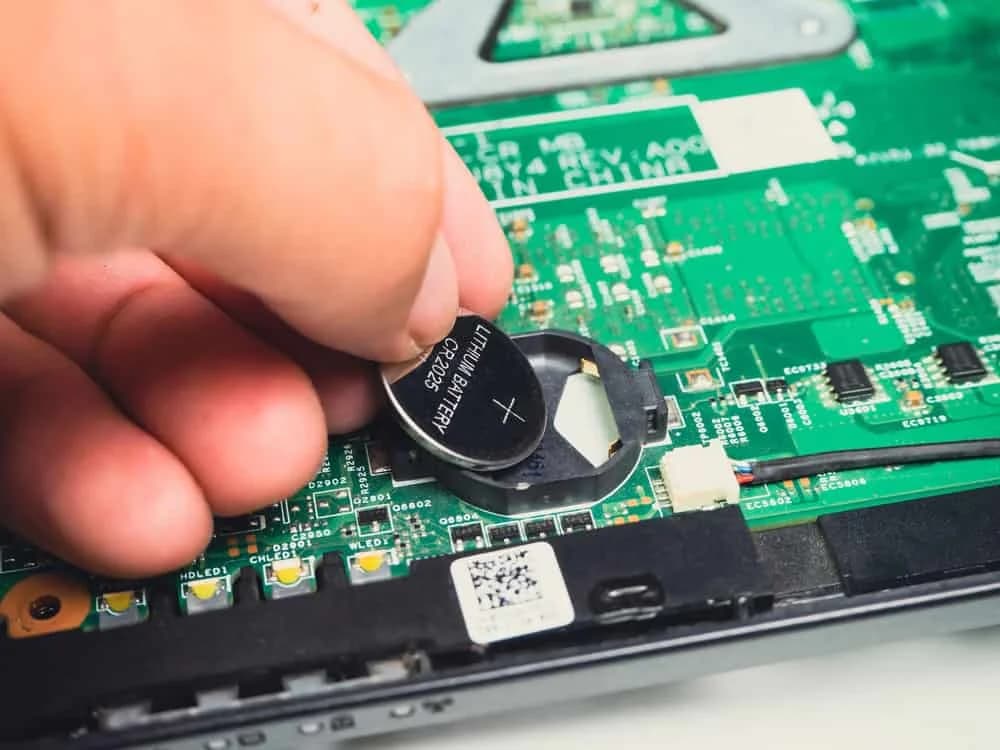
Understanding battery sizes is essential for choosing the right power source for your devices. This comprehensive guide covers all common battery sizes...
For more information on industry standards, see printed circuit board and IPC standards.
"A CR2032 and a CR2025 share the same 20 mm diameter, but the extra 0.7 mm of thickness changes spring force, contact resistance, and often the entire safety margin of the battery holder."
Hommer Zhao, Founder & CEO, WIRINGO
Understanding battery sizes is essential for selecting the right power source for your electronic devices. This comprehensive guide covers all common battery types and their specifications.
Cylindrical Batteries (Household)
AAA (Triple-A): 10.5mm diameter × 44.5mm length. 1.5V alkaline or 1.2V rechargeable. Used in remote controls, small flashlights, and toys.
AA (Double-A): 14.5mm diameter × 50.5mm length. Most common household battery. 1.5V alkaline or 1.2V rechargeable NiMH.
C Cell: 26.2mm diameter × 50mm length. 1.5V. Used in medium-drain devices like portable radios and toys.
D Cell: 34.2mm diameter × 61.5mm length. 1.5V. Highest capacity household battery for high-drain devices.
9V (PP3): Rectangular, 48.5mm × 26.5mm × 17.5mm. Contains six 1.5V cells. Used in smoke detectors and guitar pedals.
Coin/Button Cell Batteries
Coin cells use a standard naming system: CR = Lithium 3V, SR = Silver Oxide 1.55V, LR = Alkaline 1.5V. Numbers indicate dimensions: first two = diameter in mm, last two = thickness in 0.1mm.
"For low-drain electronics, I treat 2.0 V as the practical end-of-life threshold on a 3.0 V coin cell, because below that point RTCs and BLE beacons start showing unstable behavior."
Hommer Zhao, Founder & CEO, WIRINGO
Common sizes: CR2032 (20×3.2mm), CR2025 (20×2.5mm), CR2016 (20×1.6mm), CR1632 (16×3.2mm), CR1220 (12×2.0mm).
Lithium-Ion Batteries
18650: 18mm × 65mm cylindrical. 3.7V nominal. Used in laptops, flashlights, and electric vehicles.
21700: 21mm × 70mm. Higher capacity than 18650. Increasingly common in EVs and power tools.
14500: Same size as AA but 3.7V lithium. Not interchangeable with AA alkaline.
Specialty Batteries
CR123A: 17mm × 34.5mm, 3V lithium. Used in cameras and tactical flashlights.
A23: 10.3mm × 28.5mm, 12V. Used in garage door remotes and small electronics.
Choosing the Right Battery
Consider voltage requirements, capacity needs, discharge rate, and operating temperature. Always match the battery type specified by the device manufacturer.
"If the data sheet gives 220 mAh at a 15 kOhm load, do not assume you will get the same runtime at pulse loads above 15 mA; coin-cell capacity collapses fast once internal resistance dominates."
Hommer Zhao, Founder & CEO, WIRINGO
If you want to turn this topic into a production decision, review our battery life calculator, check the supporting numbers on the unit converter, and use the contact page if you need a second review before release.
FAQ
Can a CR2032 replace a CR2025 safely?
Only if the battery holder can tolerate the extra 0.7 mm thickness. Both cells are 20 mm in diameter and 3.0 V nominal, but the mechanical fit is the first pass/fail check.
What voltage is too low for a 3 V coin cell?
For many RTC, CMOS, and low-power sensor circuits, replacement should be planned around 2.0 V to 2.4 V. Below that range, reset events and clock drift become much more common.
Why does a higher-capacity coin cell not always last proportionally longer?
Capacity ratings such as 160 mAh, 220 mAh, or 620 mAh are usually measured at light loads. Pulse currents above about 10 mA to 15 mA can reduce usable runtime sharply because internal resistance rises.
How should coin cells be stored for best life?
Store them at roughly 15°C to 25°C in original packaging and avoid shorting the terminals. Good cells typically target 5 to 10 years of shelf life depending on chemistry and brand.
Are CR and BR coin cells interchangeable?
Not automatically. Both are lithium chemistries, but discharge behavior and low-temperature performance differ, so the device data sheet and holder tolerance should be checked before substitution.
What marking dimensions matter most when comparing coin cells?
Diameter and thickness matter first. In IEC naming, a CR2032 is about 20 mm by 3.2 mm, while a CR2025 is about 20 mm by 2.5 mm, which is enough to change contact force and fit.

Need Help with Your PCB Design?
Check out our free calculators and tools for electronics engineers.
Browse PCB Tools"In over 20 years of manufacturing experience, we have learned that quality control at the component level determines 80% of field reliability. Every specification decision you make today affects warranty costs three years from now."
— Hommer Zhao, Founder & CEO, WIRINGO