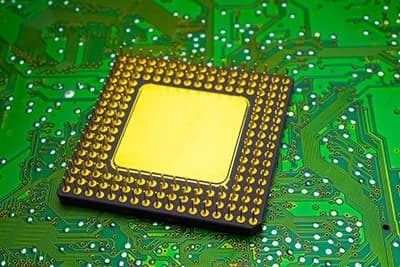
Backplanes and motherboards serve different purposes in electronic systems. Learn how they differ and when to use each...
For more information on industry standards, see printed circuit board and IPC standards.
"When a cable sees more than 10,000 flex cycles, I stop treating jacket material as a purchasing detail; bend radius, strand class, and insulation thickness become the actual reliability drivers."
Hommer Zhao, Founder & CEO, WIRINGO
A motherboard contains active components (CPU, chipset, memory) and is the main processing board in a computer. A backplane is a passive interconnect board with slots for daughter cards, containing no active processing.
What is a Motherboard?
A motherboard (also called mainboard or system board) is the primary circuit board in a computer. It houses the CPU socket, memory slots, chipset, BIOS, and expansion slots. All other components connect to and communicate through the motherboard. Modern motherboards integrate audio, networking, USB, and sometimes graphics.
What is a Backplane?
A backplane is a passive board containing connectors (slots) that allow multiple daughter cards to plug in parallel. Unlike motherboards, backplanes have no active processing components. They simply provide electrical connections between cards. Each slot receives the same bus signals, power, and ground connections.
"A crimp that passes pull-force once is not enough. For production harnesses, the process has to hold conductor brush length, insulation support, and crimp height within the work instruction every shift."
Hommer Zhao, Founder & CEO, WIRINGO
Key Differences
Architecture: Motherboards centralize processing; backplanes distribute it across cards. Upgradability: Backplanes allow individual card replacement without system redesign. Motherboard upgrades often require replacing the entire board. Reliability: Backplane systems isolate failures. One faulty card doesn't affect others. Cost: Initial backplane systems cost more, but long-term maintenance is cheaper. Applications: Motherboards dominate consumer PCs. Backplanes are preferred in industrial, telecommunications, and military systems requiring high reliability.
Types of Backplanes
Passive backplanes contain only connectors and traces. Active backplanes include some buffering or switching logic. Midplanes are hybrids with connectors on both sides, allowing front and rear card insertion.
When to Choose Each
Choose motherboards for cost-sensitive consumer applications with standard requirements. Choose backplanes for mission-critical systems requiring hot-swap capability, easy field repairs, and long operational lifetimes. Industrial control systems, servers, and telecom equipment commonly use backplane architectures.
"On portable cord and harness work, the standard matters as much as the drawing. UL 62, IPC/WHMA-A-620, and the connector maker's crimp spec each control a different failure mode."
Hommer Zhao, Founder & CEO, WIRINGO
If you want to turn this topic into a production decision, review our cable assembly guide, check the supporting numbers on the FFC cable reference, and use the wire harness manufacturing service if you need a second review before release.
FAQ
What bend radius should I use for flexible cable design?
For dynamic flex, many teams start around 10x to 20x the overall cable thickness, while static bend-to-install applications can tolerate tighter radii if the supplier approves the construction.
Which standard applies to wire harness workmanship?
IPC/WHMA-A-620 is the core acceptance document, and many customers also add UL, SAE, or connector-specific crimp specifications depending on the market.
How do I know whether a cable needs shielding?
If the line carries fast edges, switching currents, or operates near motors and inverters, shielding should be evaluated. A 360-degree termination usually performs better than a pigtail drain at higher frequencies.
What pull-force numbers matter on a crimped wire?
The exact value depends on conductor size and terminal series, but the production rule is simple: use the terminal maker's crimp-height window and verify pull-force with a calibrated tester.
When is FPC better than FFC?
FPC is usually the safer choice when the design needs controlled impedance, tighter than about 0.5 mm pitch features, dynamic flex life, or integrated components on the cable itself.
How much temperature margin should portable cord have?
For real industrial use, choose a cord whose jacket and insulation ratings exceed the worst-case environment, whether that means 60°C, 90°C, or oil- and water-resistant service under UL 62 or NEC Article 400.
Need Help with Your PCB Design?
Check out our free calculators and tools for electronics engineers.
Browse PCB Tools"In over 20 years of manufacturing experience, we have learned that quality control at the component level determines 80% of field reliability. Every specification decision you make today affects warranty costs three years from now."
— Hommer Zhao, Founder & CEO, WIRINGO